I was lounging in the Asian Pacific American Cultural Club office, a place I’ve come to find comfort in. I was munching on my lunch and working on homework as I felt the energy shift in the room. Club members were welcoming in a tall Indian boy who was soon cracking jokes with everyone in the room that he knew (which was practically everybody).
We made eye contact, and there’s this thing that I’ve experienced here at CSU that happens when one South-Asian notices another South-Asian, an instant connection that forms. He approached me and we made conversation, bouncing off one another with comical jabs.
I explained my project to him and he was immediately on board and willing to help in any way he could.
Little did I know that I had not only found an interesting perspective for my independent study, but I also found a friend who I had a life changing conversation with.
Faraz Bukhari
Faraaz Bukhari is a third year student studying Health and Exercise Science with the goal of becoming a physical therapist. He is a very active and involved student as he is a part of campus politics in student government, is in a running club, helps freshmen navigate college life as a Resident’s Assistant, and brings a level of understanding to complicated concepts to students as a Teaching Assistant.
Bukhari was drawn to his field of study through his own experience in physical therapy clinics. He grew up with pigeon feet and spent quite a lot of time in these clinics to fix his posture. Like a moth to a flame, he became fascinated with the social aspects found within this science.
“You are talking to people who are discouraged, who are broken, who have been injured,” Bukhari said. “And you’re guiding them through this healing process.”
The social interactions and the push to help people on a personal level was the thing that attracted him to choose his major earlier this year.
This sociable personality followed Bukhari throughout his entire life. As a military kid, he moved around a lot and he relied on his ability to adapt to change and his outgoing personality to make friends and survive.
He wanted a field that allowed him to interact with people, that let him be the social butterfly he naturally was. When he was a child he wanted to be a waiter simply because it let him interact with a multitude of people on a daily basis.
As he got older, he wanted to become a teacher, a job that he saw a lot of value in, a goal that he was turned away from by a loving, yet brutally honest grandmother that did not see the financial stability in this career.
He found Health and Exercise Science, a field that was in STEM that aligned with his needs as a social butterfly.
“I knew I had to choose something in STEM, not just as an expectation as a brown person, but also as a way to sustain myself and my family moving forward.” Bukhari said. “Not to say that journalists, artists, and writers don’t make money, but growing up that just wasn’t the way to do it.”
The Importance of a Single Samosa
Our conversation branched out to the lack of representation of South-Asians in media and literature, and we discussed an experience that I had never been able to put into words before.
When Bukhari was a senior in high school, he was able to choose what kind of literature he wanted to study, and he picked Asian-American literature, where he saw himself represented for the first time.
“I’ve never read anything that had the word samosa in it. There was nothing about opening the door to your house and smelling all the spices of your mom’s cooking.” Bukhari said. “It was nice reading things that were about me. And that made me wonder why don’t more folks in our culture write more?”
Bukhari never worried much about representation when he was younger, but when he finally read about himself, he felt seen, something he hadn’t felt before. I had a similar experience when I had first seen myself represented in a way that I was actually proud of.
We did not know what we lacked until we had it. We had not felt what it was like to feel unseen until we had felt seen and had understood the difference.
Kids don’t really think much about representation and social issues. However, there was a story I had read about a child seeing a character in the Disney movie, Encanto, that looked exactly like him, and the boy had the biggest smile on his face.
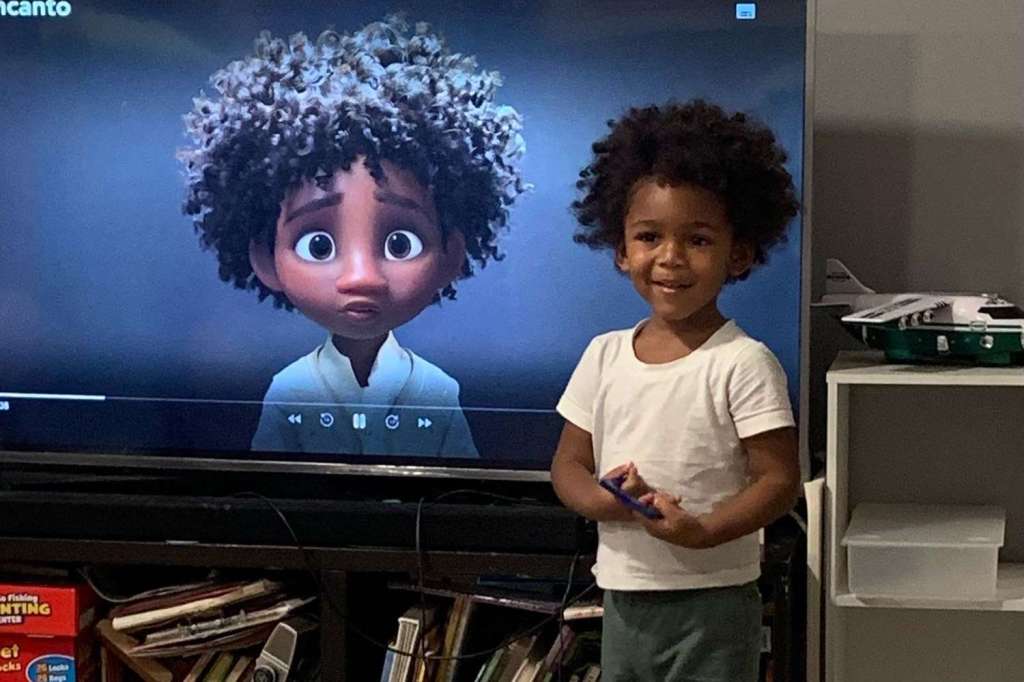
Something powerful happens when a child sees themselves on TV and says to their parents, “Hey! They look like me!”
This heavily ties into my last post about representation. Simply being able to see yourself in a TV show or in a movie can change the way you see yourself and what you think you are capable of.
Bukhari and I discussed the usual stereotypes that come with being South-Asian. The nerdy Indian boy or girl, “the model minority” as he put it, and how neither of us fit into this box that many have put us into.
He has struggled with this conflict of identity a lot. He is not the typical STEM or South-Asian student, he strays far from what the stereotypes portray. He is perhaps the most outgoing person I have met during my time at CSU, but he has battled with what people expect him to be as an Indian student, and what he truly is.
Expectations
Bukhari grew up with two older, high achieving siblings, his sister is attending Cornell and his brother is at Berkley.
There is naturally a lot of pressure South-Asians kids are under, but when you already have golden standards to follow in your own family, that pressure is heightened.
He did well in school, but he really used his athletic and social expertise to help him stand out from his siblings. He is the most outgoing in his family and this has helped him come far in his extracurriculars outside of school, things that he does to just help and give back to the community.
He was naturally drawn to education and learning and saw a lot of value in it, which explains why he wanted to be a teacher. But rather than being pushed to excel in academics because of his passion for education, there was rather a level of disappointment he was running from.
“If you didn’t meet that standard (the South-Asian standard), there was disappointment,” Bukhari said. “I think the fear of disappointment is what has carried me this far.”
Circling back to Bukhari’s decision to pursue a STEM field, a big part of it has to do with the unsaid expectations that are put onto South-Asian kids to chase after a job in STEM.
His decision to choose a job in STEM was not solely for him, but for his parents as well.
I have talked much about the importance of status in South-Asian cultures, as well as how parents are looking out for their children when they push them to pursue STEM fields. However, something that I did not fully understand until recently is the mindset behind the collective and how that affects South-Asians in their decision-making ability, and in practically every other aspect of their life.
The Collective
What I learned from my conversation with Bukhari about my own culture was how much value we put on the collective. Every decision that is made is not for an individual, but rather for the benefit of the whole family.
Bukhari is someone that loves to help people. He sees merit in people and believes that everyone has a story to tell, and if he is able to, he would like to be a part of that story.
His intense care for other people can be tied to how he was brought up. He was taught to think about other people’s needs and what would be best for them. There was not much space for individualism, which is something that he has struggled with.
“In our culture there is a lot of focus on the collective rather than the individual,” Bukhari said. “When you pursue things that are related to your own happiness that’s seen as selfish, but I get why it exists. It’s the same reason behind arranged marriages.”
Arranged marriages are common occurrences in our culture that happen to help tie two families together in order to keep the culture going. It’s seen as less of an individual choice, and as more of a decision for the family.
There are two sides within Bukhari that battle everyday, the side of him that knows he needs to take care of himself, and the side that wants to help and care for everyone. He is learning to step aside from helping others and to think more about himself, something I know many South-Asians have had to learn to do.
“Am I doing this because I want to do it? Or am I doing this for others? Are there certain things that I do just because I’m a brown son?” Bukhari continued. “How do I navigate these expectations when I don’t even know what my own are? The emphasis has never been on me.”
A Difference in Culture
Growing up a child of immigrants in the United States is a unique experience. These children must learn to navigate the culture they are growing up in that is much different than the one they live in at home.
It’s common to see children being told stories from their parents about their time growing up, anecdotes that give advice and at the same time build the bond between parent and child.
These interactions are few and far between in our culture.
“The only time I can get stories from my parents is if I dig and ask,” Bukhari said. “They don’t really talk about themselves or about their past.”
There has to be a direct correlation in this lack of communication in South-Asian cultures to how our culture sees individualism and the humanities. There’s a storytelling aspect of the humanities that is crucial for people to learn and grow that is usually not as valued.
Bukhari had asked earlier why people in our culture don’t write more, and I believe it has to do with how our culture views emotions. We have been taught to prioritize the collective, to put our emotions and feelings on the backburner in order to make sure everyone else is okay.
South-Asian parents don’t show love in a typical way that is expected from parents in the west. How they show love is by pushing their kids to be the best they can be in a field that will guarantee them a job, to ensure that they won’t face the hardships that come with poverty.
There is a lack of expression in the culture that can be related to our lack of vulnerability, our lack of shared emotions. Love is shown differently, and sometimes that love can be harder to understand. And as I have come to learn through my interviews and own reflection, it’s not usually understood until much later.
But this expression is important for our culture to grow. We need to see stories being told of our culture on our TVs and in our books. We need to see that South-Asians are more than doctors and engineers.
There is change coming, I can feel it. I am patiently awaiting for a picture to emerge online of a happy little Indian kid smiling because they see someone on their TV that looks exactly like them.
 NoCo Convos
Leave a comment