By: Boden Bascom
Fort Collins, Colo.- While the effect cities have on development and innovation are undeniable, they are also breeding grounds for unhappy people if not developed in the right way. Cities need to maintain an equitable relationship with the people and land around them to foster success personal well-being, and improve infrastructure. Outdoor space and accessible transportation are key to maintaining a healthy, equitable community.
A problem with many cities today is that they are not equitable. People can become trapped in places where they don’t have access to the proper facilities required to succeed, creating an unsustainable future for the city. The Urban Brain: analyzing outdoor physical activity with mobile EEG discovered a person’s productivity and engagement were increased while their frustration decreased. These changes occurred as the subjects walked from a busy street to the park.
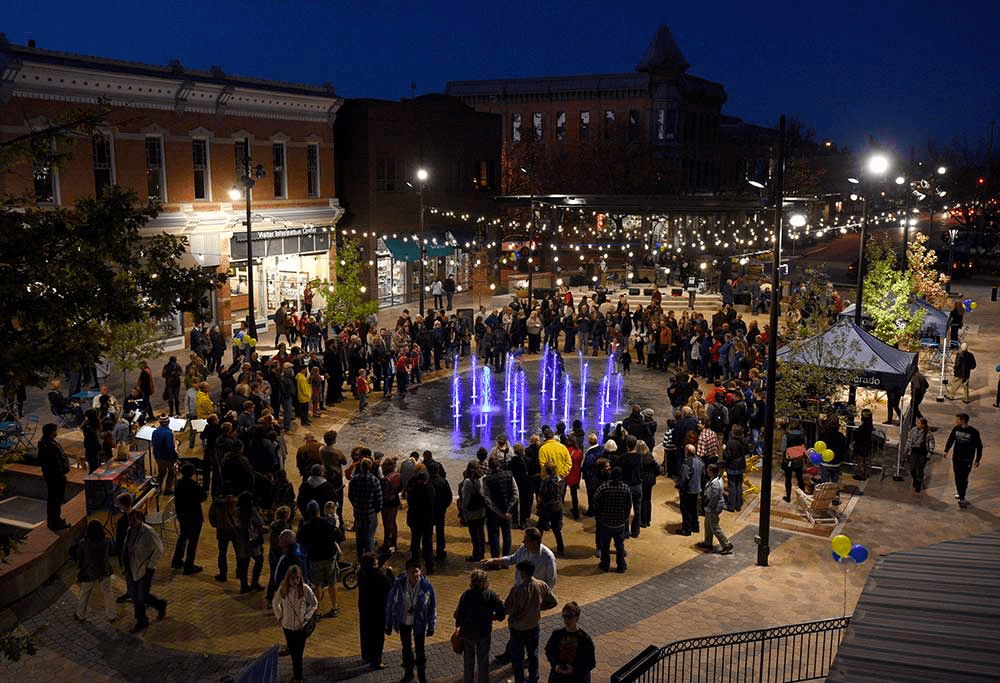
Downtown Fort Collins, CO, at night. Photo by: “Downtown Fort Collins.” Hotels, Restaurants & Things To Do
Intensive urban growth leads to many cities’ downfall. History has shown that when a population density becomes too high it gives way to an unsustainable living environment. Chapter two of Happy City explains how Rome’s community became too crowded and divided, leading to Rome’s downfall. Rome and other historic cities have given examples of how even powerful, wealthy cities can fail or succeed.
Active transportation has shaped part of Fort Collins identity. In 1970, Betty and Bill Sears led a movement that led to Fort Collins having over 200 miles of bike lanes and 50 miles of marked trails. The Sears petition helped shape outdoor spaces and city planning, allowing for spread-out yet accessible facilities. The center of the Old Town District is designed for a social experience, making it feel like a united town no matter where you go.
Every city has unique needs, and we use examples of historical successes to plan best. The planning put into Fort Collins has given wake to a successful, self-sustaining city that has a positive and equal effect on its residents, creating a productive and innovative environment.
 NoCo Convos
Leave a comment