A concept that sparked fear within the government as they began to question why anyone needed to learn about sex education in a formal setting then presented the opposing idea that by choosing to educate the young on sex, they would become wilder and therefore it would cause more issues than solutions. But as time has gone on the understanding has grown to accept that the best way to make sure people are having sex safely is through educating them within a classroom setting.
This is the trajectory that sex education has taken, especially as it continues to be changed and modified for those who are trying to gain a better understanding of what and how sex education will continue to shape the future of children. However, the challenges and fears that erupted in the early 1980s, after nearly 20 years of sex education trying to be a part of the general knowledge that people got, have continued to have major impacts to this day on what sex education looks like for those in high school and sooner.
But looking into the early aspects and challenges that overtook those who were trying to get information about sex out to people in a way that was not only accurate but also useful began in the 1990s thanks to the Sexuality Information and Education Council of the United States. With the support of the national guidelines task force they were able to come up with a curriculum design that would help understand what was already being taught and what needed to happen for sex to be taught in beneficial way. This original curriculum made sure that information provided was accurate for not only human sexuality but beyond that as they looked into all aspects that could or could not be a part of one’s sexual journey. They also wanted to make sure there was a healthy attitude about sexuality and communication so that they could make responsible decisions as their own human beings. But there was still a large push and try for the focus to be on abstinence only education.
Many of these aspects are still seen in today’s education, however, much of it has still shifted in that they don’t offer as complex of an understanding of what a sexual experience could look like for humans. The idea was that education would be focused on community-based abstinence, but in 2009 the Obama administration changed the funding so that it would focus more on a Teen Pregnancy Prevention Program and the Personal Responsibility Education Program. But this was just the beginning and the biggest forms of what most would like to see sex education look like now.
The funding that the Obama administration transferred was directly tied to noticing a declining trend in teen pregnancy after education had increased. Within a modern-day context something that has helped benefit this is the education on forms of contraception and birth control that help prevent pregnancy. There is also a lot of support that comes from proper condom demonstrations happening in schools that can not only encourage personal responsibility but reduce pregnancies and STDS.
Abstinence only education was still extremely prevalent in this era where the idea of sex education shifted. However, the passing of what is known as the “chastity law” in 1981, legal name the Adolescent Family Life Act. Helped make sure that there was funding dedicated specifically to abstinence only education that was developed by churches and religious conservatives. And since 1996 the act has continued to not only develop but also be something that helped other programs be funded to focus on abstinence only education.
Despite all efforts to enrich sexual education programs, not much of a difference has been made. Many schools still enforce that students learn a well-rounded education in sex however, according to the CDC more than 95% of teenagers in U.S schools, churches, community centers or other places, receive some “formal” sexuality education before they turn 18. And 89%-82% of that is saying no to sex. There is still a large understanding that sex education will come from parents more than it will come from schools.
But from my own research and survey done of college students in the front range area, 66.7% of the students said they receive a somewhat adequate sex education in high school, no one responded that they felt they received an adequate sex education. And even though 33.4% of these respondents are from Colorado many are from around the nation.
Narrowing the conversation specifically around sex education within Colorado first means taking a look at the law. State policy says that sex education is not required in schools meaning that school districts can decide whether or not they want to offer sex education and if their school does offer sex education students can decide whether or not to take the class.
In an interview with Jo Dixon who is the Health Curriculum Facilitator for Poudre School District “the state of Colorado leaves it up to each district to decide what curriculum they choose to teach in each district regarding health education or sexual health education” she said.
Which is exactly what the state law encourages however, it doesn’t make it clear in any of its writing that the education should be abstinence only.
Dixon mentioned this is often dependent on where the district is located because it can influence what the education will look like.
“Fort Collins is a pretty liberal community. So, it’s not going to be an abstinence only based program, which is technically a lie to kids. Because we want to show all of the options, but then let kids make their decisions for our students” Dixon said.
This is very accurate to what can be found within the Poudre School District curriculum as it is very thorough and informative in what is shared within their curriculum as they look into birth control options, what a safe and healthy relationship and sexual interaction looks like, discussions around HIV and AIDS, as well as look into gender and sexuality. But the largest caveat to this is that the education despite being extremely informative is not required for students to take, per Colorado state law.
This policy was almost changed in 2019 when Colorado House Bill 19-1031 was introduced with a focus on comprehensive human sexuality education. This would not only change the law that has already been created to make sure that everything was covered within human sexuality education but would also make it so that it will be required and something that would continuously be monitored, however, this didn’t pass and has not been reintroduced since.
“In my dream world every student is required to have human growth and development at the elementary level and human sexuality at the middle and high school level,” said Dixon.
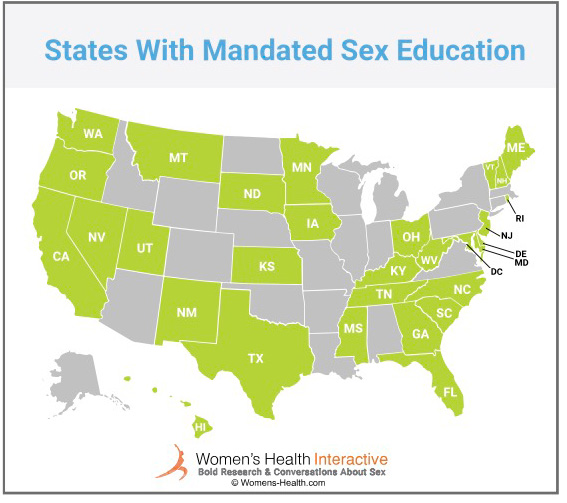
Especially as we try to stay away from abstinence only education that is a method that is still stressed in 29 states within the United States. A comprehensive education is better than an education on how to best not have sex.
 NoCo Convos
Leave a comment