
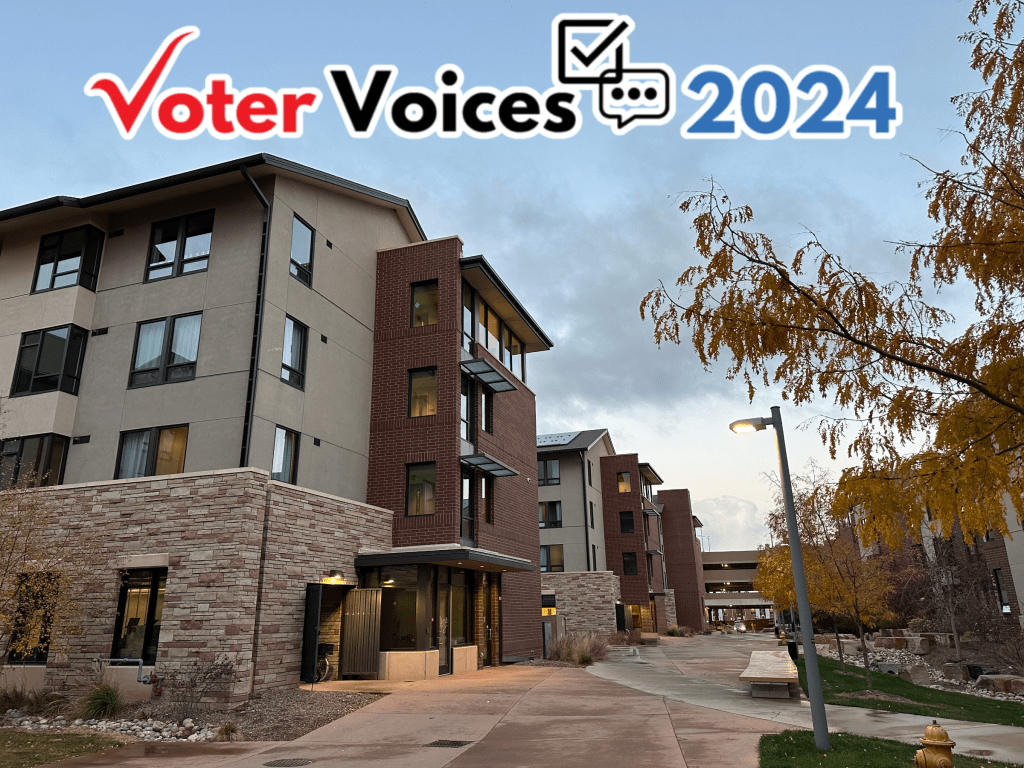
More than 7,100 Coloradans have responded to our Voter Voices survey and across the political spectrum, many of them said the cost of housing is a top concern. If you’re a voter who’s concerned about housing costs, here’s where your vote has the most impact.
By Megan Verlee, CPR News
Living in Colorado, for many, means spending a lot of time worrying about how to make the rent or the mortgage, or whether they’ll ever be able to buy a home.
Housing costs have been on a long and sometimes sharp climb throughout the state. In Colorado Springs, home prices have risen 119% since 2015, according to the Common Sense Institute. In the Denver area, the average sale price for homes this year is $617,000, up from $304,000 a decade ago.
That shift has been driven by a long-running mismatch in supply and demand. Between 2013 and 2020, more than 40,000 new people a year were moving to the state. And while Colorado has built a lot of new housing, it hasn’t been enough to keep prices from climbing ever higher.
“My family moved to Colorado from Arkansas, where the cost of living is extremely low,” said Luke Spencer, a Residential Assistant and student at Colorado State University in Fort Collins. Spencer has been living in Fort Collins with his family since he was 4 years old. “My parents bought a house in 2008 or like 2009, and it’s doubled in property value. So I think that just kind of says what it does about just the cost of living, and how we’ve done no improvements to the house. It’s just the market going up.”
In many ways, what’s happening here is just an extreme version of what people are experiencing across the country. Since the Great Recession, America has seen an ever widening housing gap, with more and more middle-income families priced out of home ownership.
Five-year Fort Collins city councilperson Julie Pignataro says that even in a smaller city like Fort Collins, the cost of housing has increased dramatically since she arrived in the 1990s.
“Throughout college and afterward, I moved around quite a bit, and I never really had too much of a problem finding a place,” said Pignataro. “Fast forward to my current home, which I’ve lived in the longest. My husband and I bought it in 2012 but it was the third house that we put a bid on, and we had to provide $10,000 over their asking price, just to be competitive. And I have heard that we have data to show that it has only gotten worse since then.”
Those trends have hit renters hard, too. Denver’s median monthly rent increased an eye-watering 82% between 2009 and 2021, climbing from $856 a month to $1,554, one of the steepest increases in the country in that period. Recent U.S. Census data found that a quarter of Denver tenants spend more than half their paycheck on rent. Today, the average rent in Pueblo stands at close to $1,000 a month for a one bedroom. In Grand Junction, it’s $1,100.
Brendan Mahoney, owner of At Home Realty in Fort Collins, says that renting prices have changed drastically since he first entered the housing market back in the late 1990s.
“When I rented my first apartment out of high school, I want to say the rent was somewhere between four and $600 for a two bedroom little basement apartment,” said Mahoney. “I had friends that were renting rather nice two bedroom apartments, newer places in the $600 range. Those are probably going for close to the $1,600-$2,000 range today.”
While both the inflow of new people and the spike in housing costs have leveled off in the last year or so, households across Colorado still feel the strain.
For Spencer, this increase in cost of living is a large obstacle for young people just trying to survive in the modern world. Both Spencer and his older sister became Residential Assistants at CSU partially because the university provides housing as part of compensation for the position.
“Paying for college and housing, and food is just unsustainable for me,” said Spencer. “For me, the practicality of having food and housing paid for was essential. There’s no way I could afford [college] otherwise… I love being able to serve people, but a huge reason and push for it was just financial security.”
Spencer wants to see Colorado focus on developing less traditionally desirable areas to help maintain affordability without long legal battles about building homes in open spaces. While he thinks Fort Collins is moving in the right direction, he thinks that the current state of housing is going to force people out of the city with the influx of people moving to Colorado in recent years.
“It’s not sustainable, what we have right now for college students or people just trying to live in Fort Collins,” said Spencer. “The demographic will definitely start to shift a lot more and bring up some uncomfortable situations, all about people being able to stay or move.”
If housing costs and development are top concerns for you, here is where your vote has the most impact.
Presidential race
Both candidates have offered ideas to lower housing costs.
The centerpiece of Vice President Kamala Harris’ housing plan is a proposal to help first-time homebuyers with $25,000 in downpayment assistance, although critics note that wouldn’t address the shortage of starter homes on the market.
She’s also pitching new tax incentives for builders who focus on affordable housing, with the goal of 3 million new housing units built nationwide over the next four years. And she wants to double an existing program that supports local governments to pursue “innovative” approaches to affordable housing, bringing funding to $40 billion.
Harris also wants Congress to crack down on two elements of the housing market that have increasingly been a focus for Colorado lawmakers — the trend of large companies buying up single-family homes as investment properties, and landlords’ use of rent-setting apps that aggregate market data.
Former President Donald Trump’s housing plan contains fewer specifics.
During his first term, he convened experts to examine regulatory hurdles to affordable housing, and could potentially draw from their recommendations, should he win a second term.
In this campaign, Trump has blamed the recent surge in immigration for housing costs and said that his plans for mass deportations will also help bring down rents around the country. However, construction industry groups and economists warn that large-scale removal of undocumented immigrants would likely also cut significantly into the labor pool needed to build new housing.
He has attacked the Biden administration for encouraging communities to drop single-family zoning. And Trump has proposed building 10 “Freedom Cities”, each the size of the District of Columbia, from the ground up on federal land. While the proposal is light on details, most undeveloped federal land is concentrated in Western states, like Colorado.
Congressional races
Many of the housing proposals from the presidential candidates will actually depend on getting Congress to go along. Two of the bills Harris specifically mentions in her plan, the Stop Predatory Investing Act and the Preventing the Algorithmic Facilitation of Rental Housing Cartels Act are Democratic bills without any Republican sponsors.
Colorado’s Republican and Democratic congressional candidates blame different causes — and propose different solutions — to the housing crisis.
Like many of his fellow Republican candidates, Gabe Evans, who’s trying to flip the Eighth District, blames federal spending for contributing to higher housing costs and says he’d work to dial back federal dollars.
Evans argues that government spending sparked the recent jump in inflation, which led the Federal Reserve to raise interest rates in recent years. Those higher rates have meant higher mortgage payments for homebuyers, and encouraged homeowners to stay put, rather than lose their favorable rates. The trend is shifting, though; in September, the Federal Reserve lowered interest rates for the first time in four years, with analysts expecting more cuts in the future.
Rep. Yadira Caraveo, the Democrat whom Evans is trying to unseat, touts her support for boosting the low-income housing tax credit (and renaming it the affordable housing tax credit). She’s also a co-sponsor on a bill that would prod local governments to allow denser housing, which tends to be more affordable.
Many of the Republican candidates also criticize federal energy-efficiency and other construction mandates they argue drive up the cost of new homes. For their part, Democratic candidates lean into federal funding and tax incentives to support affordable housing construction.
Two of Colorado’s members of Congress have thrown their bipartisan support behind an effort to build new housing for mountain towns on nearby national forest land. Rep. Joe Neguse is sponsoring a bill to make those projects easier, with Rep. Lauren Boebert signed on as a co-sponsor.
State lawmakers
Housing has become a top issue for Colorado’s legislature in recent sessions.
For Gov. Jared Polis and many Democratic lawmakers, the solution lies in getting local governments to allow denser development in areas that are currently zoned for single family houses. The idea is that condos, townhomes and apartment buildings are more attainable for many households, while also being easier to serve with public transit.
The most ambitious effort in this area, a land-use bill that would have required cities to allow multi-family development and accessory dwelling units in more areas, failed last year amid strong local government opposition. Since then, lawmakers have taken a more piecemeal approach. They’ve struck down local growth caps. They’ve also forced dozens of cities to allow accessory dwelling units; create denser zoning near transit corridors; and eliminated minimum parking requirements in some areas, among other changes.
These are all areas where Fort Collins city council has tried to stay ahead in recent years, but have had to adapt to local problems and proposed solutions.
“I know when we made a lot of changes to our land use code in the last few years, we looked at certain policies, like allowing accessory dwelling units citywide,” said Pignataro. “[We looked at] how that affected housing prices and availability in Minneapolis, Minn., which had a great response by doing something like that. But also looking at Loveland in that same case, who has allowed accessory dwelling units, but hasn’t really had any built, and weren’t trying to solve the same problem we are.”
State law, particularly the Construction Defect Reform Act, also makes building townhomes, which are generally cheaper than single family homes, more difficult for developers. This raises costs all-around.
“Because of this law, it has made it uneconomical for developers to build town homes, which is why we don’t have that many townhomes anymore,” said Pignataro. “The state is working on that, because [townhomes] are a great way to get into the market… A great way to build equity is to start in between an apartment and a single family home, so need to build more of those.”
While the issue doesn’t break down entirely on party lines, most of the support for the state getting involved in local development decisions comes from Democratic lawmakers. Republicans have tended to support voluntary incentives for more density but characterized anything stricter as threatening the character of existing communities.
Progressive statehouse Democrats have also turned their attention to policies for renters. In recent years, they’ve unsuccessfully pushed for rent control, made it harder for landlords to push out tenants when their lease ends, forced cities to lift their caps on group housing and made it easier for local governments to buy affordable apartment buildings.
Opponents to those policies argue they put more burdens on landlords, with the risk of pushing smaller landlords in particular into selling, further reducing the supply of affordable rentals.
Republican lawmakers have also focused a lot over recent years on construction defects laws, arguing that the state makes it too easy for condo owners to sue builders over problems, which put a drag on new condo construction. However, efforts to change the liability law have proven hard to get through the statehouse.
Both parties have also worked together over the past year to approve a series of property tax cuts, after soaring values led to big spikes in valuations. While those cuts will keep homeowners’ tax bills from growing quite so quickly, they are also contributing to a looming budget shortfall for the state.
Local Governments
Housing development policy is largely determined at the local level, and it’s an eternally hot topic for local elected officials. That makes your local votes some of the most consequential you take, when it comes to the future of housing in your immediate area.
Through zoning, your local officials control things like minimum lot sizes for homes and determine where developers can construct multi-family buildings, and where they must stick with single-family units. Their voices also carry significant weight when the state considers changes to housing policy.
For residents, zoning policy can often go hand-in-hand with the character of their communities, and large new developments often meet with stiff opposition, slowing down construction time and raising costs. In Steamboat Springs, residents recently rejected a plan for 2,300 new, income-controlled units in the town.
In some of Colorado’s larger, more liberal cities like Denver, local governments have raised funding for affordable housing and been able to increase allowable development densities. But other places, like Fort Collins, have faced fierce strong pushback from residents to upzoning proposals.
Notably, the proposed “Sanctuary on the Green” development has been in the process of trying to build more affordable housing for young families in Fort Collins since 2018, but it has been delayed multiple times since appeals in 2022. This is also seen with how new businesses are built in communities, and what kind of businesses are built near different kinds of housing.
“Costco almost always has a gas station associated with it,” said Pignataro in response to a question about the Costco that was built just a couple hundred feet outside of Fort Collins city limits in 2014. “We have all these laws about where gas stations can be. The most logical place is that Costco would be along Harmony Road, and there are rules that you cannot have gas stations along Harmony or something.”
This kind of zoning law can leave a community with denier’s remorse.
“I would say this council and the last are trying to be a little more business friendly,” said Pignataro. “We understand that, yes, we definitely lost out on some major tax revenue from a big box store like that.”
Missing out on these tax dollars leaves less potential money for infrastructure, education, and subsidized affordable housing.
Ultimately, Mahoney believes that this, combined with the lack of affordability in housing, can lead to a city potentially being less accessible of a place to live compared to its surrounding communities.
“People that want to live in Fort Collins, want to live in Fort Collins. People that want to live in Northern Colorado will often settle in Timnath, Wellington, Windsor, or Loveland,” said Mahoney. “It’s always a little bothersome to me when I see all the cars saying ‘Fort Collins Police’ parked in Wellington and Windsor and Timnath. It’s unfortunate that our tax dollars are paying them to buy homes in different cities.”
Ballot Measures
Voters in a number of Colorado communities will decide on housing-related ballot measures in this election.
For example, Denver will vote on proposals to increase funding for affordable housing.
Voters in Montrose, Avon and Mt. Crested Butte will consider increasing taxes on lodging to pay for housing projects and other causes. In Dillon and Snowmass Village, voters will consider whether to approve new workforce housing developments.
In Fort Collins, there aren’t any local ballot measures that are housing specific in 2024, but there are many that would increase the cost of living through taxes. These include Ballot Measure 4A, Measure 6A, and Measure 6B.
The city of Fort Collins added 11 metro districts for property tax purposes in 2021, and voters decided against a measure in 2023 that would have allotted $16 million annually to help fund affordable housing.
Mahoney was against the metro tax in 2021, thinking that it contributes further to higher costs to build and purchase a home, and increases the variability of what he believes is a historically stable market.
“Fort Collins has avoided having any Metro tax for new construction,” said Mahoney. “They’re doing it now, but I find that very unappealing for my buyers and myself. I don’t agree with [metro taxes].”
There is one statewide ballot measure related to housing, Amendment G, which would expand property tax breaks for veterans. Colorado voters did take a major step with affordable housing two years ago when they passed Prop. 123. That measure dedicates $300 million a year to affordable housing efforts around the state.
Ultimately, Spencer understands why some groups may oppose affordable housing policy, but thinks that affordability should be a goal in this state, and that the government may need to get creative to make that happen.
“A huge pull of Fort Collins is all the recreational and environmental things you can go do or see that increase your property value,” said Spencer. “Other housing would decrease your property value too… I think we should be trying to get less desirable locations and build affordable homes in those locations, so you can just get an influx of housing.”
Gideon Aigner, a journalism student at Colorado State University, contributed to this story.
 NoCo Convos
Leave a comment