-
Chapter 1: The Professor on the Wider Path
My journey on this story starts with a conversation with Colorado State University’s very own Ryan Campbell, an English Professor who had much to say about the importance of the humanities.
Professor Ryan Campbell
Campbell fell in love with the humanities very early on, despite him coming from a STEM-centric family. He grew up in Colorado, in a town, like many in this state, that was not very diverse. However, this lack of diversity pushed Campbell to seek out what he was missing in terms of his perspective of the world. He was compelled to broaden his horizons through literature, to make friends of different backgrounds, and to dive into the very thing he teaches now: the humanities.
Campbell began studying chemistry in college, but after three semesters he changed his focus to the liberal arts, believing that his education so far had been much too narrow.
“I was scared about living a life that was terribly narrowed, and so I resisted STEM as a field choice, it seemed very compelling, but not enough for me. There was that separation that wasn’t balanced.” Campbell said.
This was a common theme throughout our conversation: narrowmindedness and the balance of STEM and the humanities.
Campbell teaches a course about writing in the sciences, an arts class filled almost entirely with STEM students, and his experience instructing this class ties directly into how he wishes the humanities would be treated alongside STEM fields.
He believes that these two opposing sides of academia should work together. When asked about this class, Campbell said “It’s this amazing marriage between both hemispheres of the brain, the scientific and the artistic, that allows for deeper consideration.” He believes that this connection between subjects is something that creates humans that think deeper about the world around them.
The Humanities and Childhood
Campbell went on to say that the humanities is the tool to pave a way to a truer and more genuine human experience, something that is critical to a child’s development.
“I think the humanities allows children early on to come into contact, to enter the spectrum of difference, to enter a spectrum of alternative perspectives, of alternative experiences. They don’t have to live them or completely understand them, but it can still be a moment that explores the horizon. Children have to have that diversity in order to understand an alternative way of conceiving the world with their limited experience.” Campbell said.
The humanities play an important role in raising empathetic and compassionate human beings. As a child, being able to learn about different histories, conflicts, and cultures can be a way to experience the depth of the world all while being in one place
Are The Humanities Respected?
When I asked Campbell if the humanities were as respected as they should be, his answer was short and sweet.
“No…not even close.”
Campbell believes that there are specific things within the humanities that need to be taught to help children understand the world, and without these things, our students simply end up as specialists.
“They’ll be taught things very specifically and narrowly that they will only be able to operate in a single way, instead of being able to problem solve themselves…It’s an overreliance on the rational, and relying on the rational in irrational times…it’s a problem.” Campbell said.
The absence of the humanities in education and everyday life creates close-minded people who only accept what they know. When there’s a lack of critical thinking we resort to listening to the loudest person in the room.
Concluding Thoughts
There is a lot of power in the humanities. From my conversation with Campbell, I was able to understand that it can serve as a necessary checks and balances system in our society. The humanities can push us to act more civically, empathetically, and courageously.
Though both of our academic lives focus around liberal arts, Campbell and I both agree that we cannot have one without the other: STEM without the humanities, nor humanities without STEM.
My discussion with Campbell brought up a lot of ideas about how the humanities shapes our lives, both in academia, and in the world. As Campbell simply put, “You cannot be human without the humanities.”
-
Timeline of the Land Use Code in Fort Collins
Just like most things in government, changes don’t come overnight and that was especially true with the Fort Collins Land Use Code. Rewriting a code that hasn’t had any major changes in 25 years takes time.
Last week I introduced who I am and why I am studying the Land Use Code situation in Fort Collins. This week I wanted to do my best to give a comprehensive timeline of what’s happened so far.
From minor updates to the total rewrite, to the repeal of the Land Development Code, to the formation of citizen interest groups, there is a lot to cover.
My main resources for this task were the Coloradoan and the Fort Collins City Council meeting records. It’s important to note that the city would often make minor adjustments to the land use code but nothing major came until around June in 2022.
From what I was able to find, just in the year 2019, the Council adopted 11 different changes to the Land Use Code, all minor adjustments.
Issues like affordable housing are complex with no one way to address it. Policies that aim to solve complex issues like affordable housing are multidimensional. They have to be in order to be effective.
The way I see it, Fort Collins started to look at affordable housing, identified the quick fixes but ultimately saw the writing on the wall and decided it was time to update the land use code.
Housing Strategic Plan
In January 2021, the city came out with the Housing Strategic Plan and it is a comprehensive look at affordable housing in Fort Collins. The plan starts with Fort Collins’ vision for the future and then dives into problems and possible solutions.
In the plan, the City identified the seven greatest challenges they are facing when it comes to affordable housing.
Some of these challenges include things like the pure lack of affordable housing that people need, lack of city funding to encourage affordable housing and the fact that job growth continues to outpace housing growth.
Image: Page 40 and 41 of the Housing Strategic Plan, greatest challenges 1-12. Courtesy of Fort Collins.
Image: Page 42 and 43 of the Housing Strategic Plan, greatest challenges 13-21. Courtesy of Fort Collins
Image: Page 44 and 45 of Housing Strategic Plan, greatest challenges 22-26. Courtesy of Fort Collins.
What was most impressive was the 26 strategies that the City identified. This included changes to the land use code like removing barriers to development of accessory dwelling units to creating a new tax or fee to fund affordable housing directly from the city.
Land Use Code
By June 2022, the City of Fort Collins was underway updating the land use code. A document as long and as detailed as the land use code is never easy, and that is the experience the city had.
Throughout the process of rewriting the land use code, the city held public comment and hearings. According to the website, it appears that the city held a considerable amount of public discussions, which can be found here under “What was the community engagement process for these code changes, and who was involved?” tab at the bottom. This is an important piece of information to keep in mind later down the road, as community engagement is something I will be exploring.
Land Use Code Adopted
On Nov. 1st, 2022, the council approved the Ordinance 114, 2022, which adopted the Land Development Code. The name was changed from Land Use Code to Land Development code. On the city’s website, they said this was to better reflect the purpose of the document.
The Land Development Code was set to go into effect on January 1st, 2023 but a petition was filed to stop the code from going into effect.
Preserve Fort Collins
In response to the Land Development Code being passed, Preserve Fort Collins, a group of citizens that did not approve of the Land Development Code was formed. Around the same time that Preserve Foco was formed, Foco Forward was also formed.
Foco Forward was formed by City Council members Julie Pignataro and Mayor Pro-Tem Emily Francis. The group was concerned about what they believed to be misinformation that was spreading about the land use code.
Referendum
The successful referendum was presented to the city council by the city clerk on Dec. 30th, 2022. The petition needed 4,228 valid signatures but collected 6,447 valid signatures. The Preserve Fort Collins group was able to collect 7,443 signatures but 996 were presumably deemed invalid.
According to Fort Collins referendum guidelines, petitioners had 20 days to circulate the petition and return it to the city clerk.
A Nationwide Issue
Affordable housing is not just an issue in Fort Collins or even in Colorado- it is an issue that most of the country is facing right now.
When the Colorado General Assembly convened for the 74th regular session on Jan. 9th, the first bill introduced in the senate was about housing. The bill, SB23-001, would create a public-private partnership to allow state owned land to be developed for housing.
Governor Jared Polis’ State of the State had a major focus on affordable housing. The attention from the state legislature and the Chief Executive of the State further emphasize how big of an issue affordable housing is not just in Fort Collins but in Colorado.
What’s Next?
Preserve Foco had a couple reasons they wanted the Land Development code repealed. They thought it would fundamentally alter certain parts of Fort Collins, such as Old Town and they were unhappy with what they deemed was a lack of public outreach by the city.
FoCo Forward approved of the plan and thought that it was the right direction that the city needed to move in.
As the city goes back to the drawing board to look at the Land Development Code, how will they ensure both sides can walk away satisfied, if that is a goal of the city?
The obvious remains obvious here. Something has to be done. The City cannot just move on from the Land Development Code and worry about it in a few years. What will be different, if anything, this next time around?
I hope that this timeline gives a better idea of what has unfolded so far. There is a lot to digest and if you made it this far, congratulations and thank you.
Next week I will take a look at the Growth Management Area, another key factor in the Land Development Code. This is one of the key factors in development in Fort Collins.
Until we meet again, feel free to reach out to my email with any questions or comments.
Reach me at michael.stella@colostate.edu or @Michaelstella_
-
We want to hear from you.
Now that the Northern Colorado Deliberative Journalism Project is 1 year old, we are reviewing what we have done and wondering what comes next. This is where you come in.
As you look around the website and learn more about the Project, what do you want to see more of? Do you have an idea for an issue we should spend some time on, or a community member who people need to know?
We want to know what you think. Drop a comment below, and let us know what you think of the work we’ve done so far, and what you think we should do next.
-
A Rocket Scientist & a Journalist: A Battle Within Culture
As a current undergraduate student, I’m constantly exposed to students from all over the country that aspire to work in every field there is. I see English majors reading books that weigh more than my cat back home, and Mechanical Engineering majors traversing through complex math equations on whiteboards that would take me months to even begin to understand. There’s a certain magic that’s in a library, seeing students from every academic world there is, working on their dedicated passion. A big part of this magic is the choice. The ability to choose the path they wish to walk, the pursuit they wish to chase.
However, as a South Asian American, academic freedom looked a bit different to me while I was growing up. There was a stigma in my culture that I faced, something that is still alive and well today: the idea that if you’re not studying a field in STEM, if you’re not a doctor, lawyer, or engineer, you won’t amount to anything worthwhile.
I’m an English and Journalism major. My life and my studies revolve around the humanities. I have a driven pursuit to chase stories and to understand people and the world around me. I’m a storyteller, a conversationalist, and an adventurer. And though I have an intense admiration for anyone in the STEM world, I could not see myself living a fulfilled life as an engineer. It’s just not me.
Though my parents are 100% on board and supportive of my journalistic endeavors now, they took some time to come around. I was an avid member of my high school’s theatre department and for a couple years I dreamed of being an on-screen actor. Though the number of South Asian representation in entertainment has grown, it wasn’t very prevalent during my time in high school, and pursuing a career in this field was practically unheard of in my South Asian community. My parents were very hesitant to let me chase this dream. They were understandably afraid for my well-being and ability to secure a job that would pay the bills and keep me fed, but being a 16-year-old rebellious know-it-all, I was reluctant to listen to reason.
My parents, who were incredibly hard-working, were unfamiliar with this new world I wanted to explore and were afraid to let me go into a jungle that was still mostly unmapped by the people in my culture. After many hard conversations, they were able to come around and be completely supportive of the path I wanted to take, and I discovered a newfound freedom that gave me the confidence to study whatever I wanted to. Though I am not studying the fine arts, I was able to use the confidence from my parents to throw myself into journalism, a field that I have absolutely fallen in love with. I was lucky to have parents that were open-minded, understanding, and trusting of me, but not all children of South Asian parents are as lucky as I am.
The battle between STEM and the liberal arts is one that I have always been aware of. I have many friends of South Asian descent who have taken the STEM path, and being one of the few who took the liberal arts route has forced me to really think about the relationship that South Asia has with the humanities, and why STEM seems to be so far ahead.
That is why I have chosen to chase this story. I want to shed light on this duel, a fight that the humanities have never even really seemed to have a fighting chance in. Ideologies that are found all throughout the liberal arts are not as emphasized in my culture, and I believe it can cause a plethora of problems, especially when it comes to parenting. The study of humanity forces one to look within themself and to observe their relationship with the world around them. It comes with compassion, kindness, and the willingness to be open to the everchanging culture and society that humans reside in.
That’s my responsibility for the next few months: to unearth and better comprehend what my field of studies means to the culture I grew up in. I plan to have conversations with literature and STEM professors, with South Asian students who are studying to be doctors and with those few South Asian students who are journeying into the fine arts. The world of academia is diverse and for that magic to be present in the university libraries, students need to be able to choose what they want to do, especially those of South Asian descent.
Come join me as I, a journalist student, work on this metaphorical rocket, a complex story about the humanities and STEM. The title of this whole project, “A Rocket Scientist and a Journalist: A Battle within Culture,” is an allegory that is meant to show the colliding of two worlds and the battle that exists within the culture I was raised in, and in culture everywhere. Next week, I will be talking to an English Professor about the importance of the humanities and how we simply cannot be human without it.
-
An Introduction to the Land Use Code

If there is one thing that every city wishes they had more of, its land. And right now, the City of Fort Collins probably wishes it had more of it.
The City of Fort Collins, like many of its counterparts, has a boundary, called the Growth Management Area,that they cannot grow past. In simple words, there is only so much land the city can develop and they are running out of it.
Fort Collins will soon reach that limit. The land left inside those boundaries that has not been developed thus far is critically important, especially with the rapidly growing population of Fort Collins.
So is the land that has already been developed and that is why the City of Fort Collins has made major adjustments to its land use code for the first time in almost 25 years.
The housing that Fort Collins currently has and the land they have left cannot keep up with projected population growth. Throw in current median home and rent prices, and it is the perfect storm.
Fort Collins recently updated their land use code, then repealed it after community concerns. There are those that oppose the land use code and there are those that support it. Both sides have valid reasons for their positions and it has been interesting to see this play out.
Doing nothing is not an option. If Fort Collins continues on its current trajectory, we will likely not have enough housing and the housing will only get more expensive. It is similar in a lot of ways to other issues like climate change: Doing nothing is not an option but how do we as a community come to a compromise where every party feels they get a seat at the table and walks away feeling like they were actually heard and understood?
Land has always been a point of interest to me. It connects us to one another, whether we want it to or not. We also have a finite amount of it. What we have now is all we will ever have.
I am from Henderson, Nevada where we are facing similar issues of a dwindling land supply and high home prices. The Las Vegas Valley has grown uncontrollably since before I was born and Southern Nevada is at the same inflection point as Fort Collins: There is a surge in population that looks like it won’t slow down for a while coupled with a limited housing supply and limited land to develop.
I am curious to learn more about the land use code in Fort Collins, what the community thinks of it and how we can address this issue as a community.
As I embark on this journey I hope that you will join me.
Every week I will be providing an update in the form of a blog post, much like this one, to give updates on my findings and to give an inside look at the journalistic process. My process will always be transparent because we are in this together.
Next week I will take a look at the timeline of the land use code to give you, the reader, a solid understanding of the situation before we take off and really dive in.
-
Learning in Ambiguity: My Takeaways From the Deliberative Journalism Project

The first of its kind and designed with the Center for Public Deliberation, the goal of the Deliberative Journalism Project is to find a way to implement deliberation into the journalism industry. It is no secret that we are living in highly polarized times, with divisions cutting through communities like a knife. But why has the sense of separation become so ingrained in our society? And has the journalism industry proliferated these polarizations and mistrust? Through our discussions and work in the course, we in the Deliberative Journalism Project, have been trying to find ways to bridge gaps in communities through journalism. This resulted in big picture discussions revolving around the following questions:
1. How does journalism factor into the polarization of communities?
Much of the news that people consume is created by national outlets. Meaning instead of reading about local issues that directly affect them, their family, and their neighborhood, people are reading about issues on a national level. This is due to the slow decline of print media that has resulted in local media being owned by national corporations in order to keep the doors open, or the erasure of local journalism completely. Corporate ownership of local journalism outlets removes the essence of journalism, storytelling, and replaces it with focuses on profits. This results in the publication of stories that will make money, instead of stories that may benefit communities. The disconnect created within local communities due to the emphasis on national news over local results from the focus on issues that divide communities instead of uniting them.
2. How can deliberative journalism combat this issue?
Deliberation is all about communicating with members in your community about issues in an effort to help solve those problems. This involves talking to people with mind-sets and backgrounds different than your own in an effort to understand one another to find a happy middle, not necessarily to change the other person’s perspective. To me, deliberation is all about bringing humanity back into the conversation. It’s about agreeing to disagree while also understanding and respecting the other persons point of view. It’s about understanding that while we have differing opinions, we are each at our core still people. Therefore, deliberative journalism is the use of storytelling to convey the middle ground; it’s taking input from a variety of opinions and communicating them without bias. Deliberative journalism ensures that multiple voices and opinions are heard in a community. It allows for the masses to be heard instead of just the loudest voice. Deliberative journalism places the focus on storytelling instead of opinion-setting and ensures stories that need to be told are shared, instead of just the ones that will bring in the big bucks.
3. Where do we go from here?
Throughout this semester in the Deliberative Journalism Project, I kept coming back to this question. The journalism industry has been around for a very long time and is ingrained into our society. For this reason, I kept wondering how any change could be possible. The nihilist in me wants to scrap it all and start fresh, but the realist in me understands that that isn’t possible. But just because we can’t start over, does that mean we can’t restructure and change? I am a firm believer that doing things the same way just because it’s how it has always been done is not always the answer, and I don’t think the journalism industry is an exception to that. The industry as we once knew it is already dying—print publications all over the country have transitioned into digital only spaces or shut down completely—so we can see that some kind of change needs to be made. I think that the following changes may help in starting to reshape the industry:
- Integrate deliberative practices into writing stories in order to return to a core value of the journalism industry: storytelling. Deliberative practices like ensuring you hear a variety of voices within a community can ensure you aren’t hearing only one side to the story. Reframing the focus back on storytelling instead of selling issues ensures that we are communicating information that people actually need to or want to learn about.
- Combat misinformation and mistrust in the media by teaching media literacy. Media literacy is crucial in our current age of technological reliance. Ensuring that people are able to understand what they consume and differentiate between fact and opinion online may help bridge gaps between groups and people in communities.
- Start small within your communities. Deliberative journalism isn’t going to overthrow the hegemonic journalism industry overnight. As such, starting with your local communities is a good way to get the conversation started. Practicing deliberative skills within your immediate communities can help in bridging gaps and uniting members of the community.
While changes in the industry won’t be easy or happen immediately, they are necessary. Integrating deliberation into the way we operate as journalists is a step we can take in creating the change we want to see. Refocusing our priorities back to the basics of storytelling and listening to those in our community is a crucial first step. The question that remains is, will you take it?
-
Photography as a Medium for Deliberation
Photojournalism is a vital component of journalism, and that extends to deliberative journalism. Being a photojournalist, deliberation is a concept that I am learning to incorporate into my work, but what does that look like? Deliberative journalism strives to address problems in a community by initiating dialogue that is healthy and productive. When done right, it should serve the community, bringing to light important subjects that may not be covered in traditional models of journalism and creating a more robust local information ecosystem. This isn’t something that journalists can do alone, however– community engagement is essential.
The photos we use to go along with news stories have a deep impact on its audience. We are visual creatures, and what we can interpret visually from photojournalism tends to shape our perception of written news. Photos also may have a longer lasting impression. Think about the photos of two-year-old Syrian refugee Alan Kurdi washed ashore on a beach in Turkey. These were taken in 2015, but you likely still remember this happening. The photos, taken by Nilüfer Demir, put a face to the Syrian refugee crisis and impacted people’s perception of the crisis around the world.
In northern Colorado, we are privileged enough to not have nearly the same level of gut-wrenching, tragic photojournalism coming out of our community consistently. The idea still applies, though: having a visual representation of an issue, especially when it features a person or people directly affected by an issue, makes that issue stand out in the minds of those who see it. It urges people to care. Where words fall short, photographs command people’s attention and beg their empathy. It is the audience of these photographs that could have power to engage with community issues and be a part of the solution.
To get these types of impactful photographs, photojournalists must put in their effort. Potential for bias still exists in photography. Photographers have the power to choose what to shoot, and what to leave out. We can compose a scene in a way that changes meaning. We use lighting and colors to convey a certain tone with our images, and that has an immense correlation with how people see and understand our photos, even if it’s subconscious– whether to the audience or the photographer. It is an intentional effort to capture a scene, in its entirety, as-is.
Beyond avoiding bias in capturing a scene, there is more bias in our selection of stories to shoot. It is possible for photographers at many media organizations to get by with just shooting what they’re assigned to shoot. They know in advance what a story will be about, when and where to show up. While this model has its place– there will always be important events and other stories that we can plan for in advance– we also miss out on opportunities that we can’t plan for. So much happens in a community that can’t be anticipated or assigned to a photographer in advance. I believe it is critical for photojournalists to be active members of their community, to know people of different backgrounds and experiences, so that we hear about these things we can’t plan for and show up to document it on time. We have to constantly be seeking stories, with our cameras on us at all times, because the unexpected moments happening in our community can be the most important.
Between photographers who put in the work, and an audience that engages with that work, photojournalism has the potential to play a significant role in deliberative journalism. Photos grab people’s attention, are easily shareable, and are powerful communication tools. They can create conversations within communities and draw attention to important subjects, exactly as deliberative journalism is intended to do– and as a photojournalist, I have learned from these ideas to strive to create meaningful work that engages with my community in these ways.
-
Changing The World Through Deliberative Journalism

As a journalist, my goal is to change the world. Stories hold a power that can not only impact the people found within the text, video, audio, or images of a story, but also those who consume the stories of real people, doing real things, and overcoming real challenges. This is how I view journalism, but is this how the rest of the world views it? Today our world sees journalists as instigators who are trying to create division and further their own agendas. As a young journalist, I know this isn’t true of all journalists. I’ve talked with peers who share this passion for storytelling and professors who want to give students the tools to succeed in this passion.
Regardless, this ‘evil’ side of journalism does have a presence, even if it may not be the majority. So, what do we do? How do we combat the problem of what journalism may be turning into? An attempt to change this appears in deliberative journalism, explored in Colorado State University’s journalism department through Michael Humphrey’s new class. The class begins with defining what the problem is and what the goal is. The problem is that journalism is changing, especially as local media gets consumed by larger corporations who change the dynamic of a company. These larger corporations often want to further their own agendas and don’t put as much thought into the community and its needs. This problem highlights how important local journalism is to truly serve the community.
The class has explored a variety of problems in journalism, from journalist bias impacting stories, to larger companies changing local journalism, to the values of quality journalism. Through multiple discussions on what journalism currently is and what we believe journalism can be, we have come to realizations that local, community-based journalism can be influential, the dynamics of bias need to be better understood, true listening and establishing rapport with sources is essential, and the people’s voice needs to be heard.
Through this class we have not only discussed these values but have worked to put them into practice. Through working with the honors blog, we have attempted to teach incoming CSU students about the journalistic style by showing them how to write journalistically, and what quality journalism should look like. The underheard voices team has worked to share the stories of underheard communities. This semester we have focused on the elderly of Estes Park but have created flyers and resources to extend the project to communities who feel that they are underrepresented and would like to be heard.
The semester has held a lot of implementations, change of directions, trying new techniques, and motivation to impact the community. Plans have changed, lessons have been learned, and stories have continued to be pursued. One thing remains the same. I believe every student in this class shares a passion to impact the community and work to share the stories around us. We’re trying to create positive journalism today, but watch us change the world tomorrow with our passion. This class is only the beginning, as we go out into the workforce, we will carry these values and techniques of deliberative journalism with us.
-
Shopping in FoCo: Local is the Way to Go

Written by Summer Turner as part of the CSU Honors Blog
Many aspects make a great community. During the last five weeks of my honors class, my classmates and I have been discussing what factors of human life create happy, sustainable, “idealistic” communities. Fort Collins, the city that was the model for the famous Disney streets, is one representation of these idealistic communities. Fort Collins is a prime example of an ideal community filled with life, colorful street art, locally owned businesses, outdoor spaces, and a thriving community of diverse individuals that share the same or similar values. Residents also seem to admire the town immensely. I talked with CSU student Diane Atherton to get her view on Fort Collins. She spoke about the wonderful people full of life and many of her favorite local spots, including Alley Cat Cafe, Gibs Bagels, and “Me Oh My Pie.”
Having lived the past five years overseas, traveling to attend university in the United States was daunting for me. When I asked people who had been to Fort Collins what they thought of the town, they gave Fort Collins their highest regard. Words such as “the best college town,” “beautiful,” and “wonderful” were used over and over again to describe the town. I admit I was frightened if I would fit in or even feel at home in this so-called perfect town. What if it did not meet the high standards that everyone spoke of? Pleasantly surprised by all of the aspects of this town, I have felt right at home as I have explored the streets and gotten engaged in many of the community’s local opportunities. Fort Collins is a beautiful, simple, friendly, sunny place. I have noticed everyone waves at you, and people are very kind. One part of the community I took notice of quickly was the unique locally owned businesses. The names of the shops hang on colored banners flowing down the street like a vibrant river. I can see that each one was founded with love, a dream made into a reality, and the feelings created in those shops are truly unique. In the downtown of Garmisch, the city I lived in for five years, there were many similarities in many aspects to the town of Fort Collins. The same community small town feel is part of the reason I chose Colorado State University.
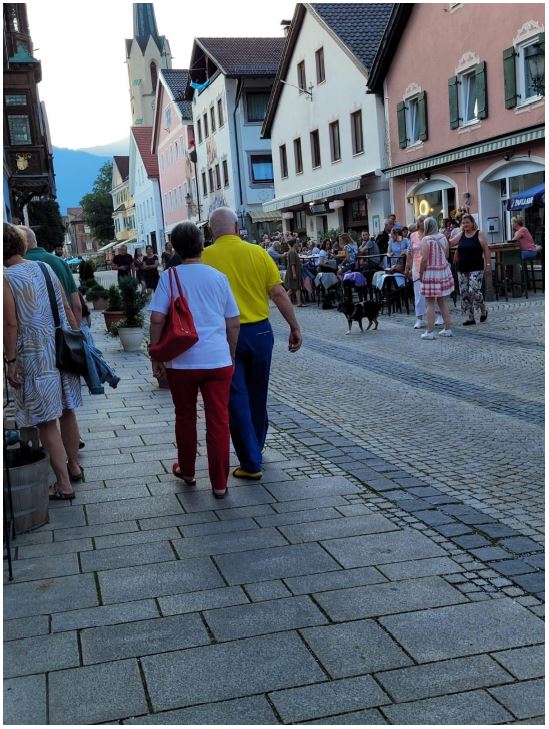
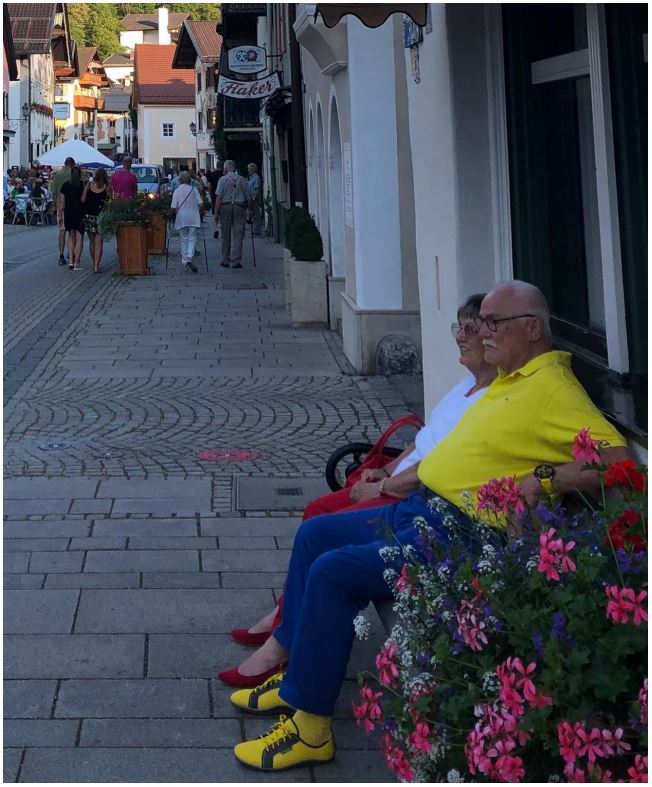
Downtown Garmisch, Bavaria, Germany I have one of my professors to thank for one of my downtown experiences. She sent my class on a scavenger hunt through Fort Collins, and along the way, I made friends and explored the many local places and community spaces. I found that coveted sense of community that was mysteriously spoken of every time I mentioned Fort Collins before moving here. I believe a large part of the sense of community comes from local businesses. While completing the scavenger hunt, I went into a shop and asked about a necklace. I returned later in the day with a friend to show her the necklace, and to my surprise, the store owner remembered me and the necklace I was interested in. She happily showed me the piece again and took me over to see a case full of similar jewelry. Local businesses are vital for the community, not only by fostering a good, friendly neighborhood feeling, but they also contribute economically by providing jobs within the community and benefiting the environment. This helps keep profits in the town, increases diversity, and encourages competition and innovation.
Small businesses also contribute to the overall feel of Fort Collins by having constant innovation, creativity, and competition. This competition drives local businesses to do more. Improvement is not sparked when you have a monopoly on a business. Allowing new businesses also allows for diversity and the fostering of peace within a community. A study done through the United Nations and American University of Beirut looks at the correlation between the current standing of peace and the local economy. They found that with more local businesses, referred to as micro- and small enterprises (MSEs), peace and relief from financial pressures are increased. The study states, “To which MSEs relieve financial pressures and, combined with positive externalities of MSE activity, aid in fostering peacebuilding.” When competition is present, old stores are driven to create and explore new ideas for stock and advertising. Fort Collins gives local businesses resources and advertising to accomplish growth, such as Open Streets, an annual event that closes streets to vehicle traffic to encourage people to walk and bike along the route. The city encourages local businesses to open up and advertise to pull in business, while setting up “Activity Hubs” which feature live music, local artists, and of course, collaboration with local businesses. The City of Fort Collins provides suggestions to make the most of Open Streets that include “Bring your business outside,” “Advertise your business before the event,” and “Help get the word out to your current customers.” These events make people spend more time in the downtown area and provide them with a clear view of shops and restaurants, encouraging people to buy and increasing profits.
Downtown Fort Collins Shopping at local businesses is one of the most productive ways to help your community grow and also support the environment with your purchases. We all need to buy things, whether it be the necessary groceries for that week or a piece of jewelry we absolutely love. If you shop locally, you support the local economy and the environment. Research from Michigan State University points out that “Locally owned businesses make more local purchases — requiring less transportation.” This local chain is good for the environment as it reduces the carbon footprint of goods and keeps the money local. Though many aspects of Fort Collins make it a wonderful place to live, having so many unique local businesses in one location allows for diversity, innovation, peace, happiness, and a thriving economy for everyone. I admire the diversity of businesses I have seen in Fort Collins, which has lived up to my expectations of a “wonderful” town. Many cultures across America are combined in Fort Collins’ picturesque streets. An evening stroll with the twinkling lights shining above in the downtown area makes me realize how important a local community is and all of the aspects that contribute to it.
Further reading and sources:
The Importance of Small Business in Your Community: Active Network blog.
Small Businesses Can Save Your Community
“Local Business Cycles and Local Liquidity.”
How Shopping Local Helps the Economy
Why Buy Local?
What Happens When You Shop Local. -
Integrated Natural Spaces in Fort Collins: A local getaway
By Jordan Rivera as part of the CSU Honors Blog
It’s been a long day with school, work, and life responsibilities. Stress, like a dark cloud above my head, follows my every move. Will I be able to turn that paper in on time? What about my biology test coming up? How much busier can work get? Should I go hang out with friends today or just stay in and recharge? The stress feels overwhelming, and I have to get out, release it all, connect with something larger than myself.
I go out for a run and take a bike path to a network of trails, winding through trees beside the Poudre River; I see turtles and birds, someone walking their dog, and the bright pop of yellow coming from the tall sunflowers to my right. The natural spaces integrated within the city of Fort Collins are a saving grace. The blending of accessible natural spaces within the urban environment is something that Fort Collins does best; it is an aspect that makes Fort Collins a happy and healthy urban space. The green spaces all throughout the city are not only aesthetically pleasing, but they serve to improve mental and physical health, enhance city sustainability, upgrade local economy, and foster meaningful community.
There have been multitudes of studies on the connection between natural spaces, often referred to as green and blue spaces (accessible land and water, respectively), within urban environments and beneficial mental and physical health outcomes. In a 2003 study on the impacts of accessible nature to children, Wells and Evans found that stress was considerably lower in children with nature nearby compared to children who did not have many opportunities to get out into nature.
When I first moved to Fort Collins, the amount of available green and blue space available to the public really drew me in. As someone who has struggled with mental health, it was crucial for me to find a place where I could feel safe going out into nature to release stress and anxiety.
Not only do these natural areas improve mental health markers, but they also have been shown to be beneficial for physical health that gives access to everyone.A connection with nature is crucial to improving the health of the nation, and with 55% of trails in the city being accessible to those using wheelchair and Motorized Mobility Devices, as well as ramps leading down to places like the Poudre River, Fort Collins has made it possible for all people to access natural space no matter their physical capabilities. This shows that Fort Collins, through the integration of inclusive and accessible public natural spaces, is improving the health of the community.
These spaces enhance the sustainability of the city and thus the health of the Earth as well. Since adopting the Open Space Plan in 1974 and acquiring the first pieces of land to be conserved, the leaders of Fort Collins have kept the conservation and health of the natural world in mind. With a goal of having “stewardships of their natural areas,” the Natural Areas Department of Fort Collins has successfully put aside 36,000 acres of land for dedicated natural space. Placing conservation as a priority not only has a direct beneficial impact on the surrounding wildlife of Fort Collins and the greater Larimer County area; it also reduces the city’s impact on global warming.
In the study of green spaces within urban areas, Lange and Rodrigues found that “Green space interventions…reduce heat island effects and reduce surface runoff.” This means that by intertwining natural space throughout the city, the surrounding carbon dioxide within the air and the water pollutant level is reduced.
The economy is also served by these green and blue spaces within the city. As shown by his study within the Journal of Environmental Protection, Shah Haq showed that urban green spaces increase property value and reduce city used energy costs. By having a more aesthetically pleasing city, property values have been shown to increase between five and fifteen percent. Additionally, since the natural areas take up space where there may have been additional buildings, and due to the atmospheric cooling effect that plants have (caused by gas exchange) the cost of cooling buildings is greatly reduced. This means that the city is both improving revenue value through property value and reducing spending through energy expenses.
Natural spaces play an important role in Fort Collins as community builders and contribute to meaningful connections throughout the city as well. One of the best ways to get connected with a supportive community is through volunteering, and Fort Collins has provided this opportunity through the Fort Collins Natural Area Adoption program, which began in 1993. There are currently forty individuals and local companies that have adopted various trails within Fort Collins. By participating in monthly clean ups and maintenance of green and blue spaces, people can help the Earth while also getting connected with a supportive community who share common goals of environmental health and sustainability. Being a “trail parent” may not be practicable to all Fort Collins citizens. So, it is great that the city puts on various community events that cater to multitudes of lifestyles and hobbies. From skygazing to history talks, yoga to community hikes, the Fort Collins Volunteer Program puts on weekly community events to bring people together in the great outdoors to foster a tighter, healthier community as well as encourage people to engage with the natural world. This example of inclusive and sustainable city events is surely one to be replicated and taken note of by cities around the nation.
Fort Collins has a multitude of natural areas, Poudre River, Spring Creek trail, Riverbed Ponds, Pineridge Natural Area are only a few.Just as Bogota’s former mayor is quoted as saying in the book Happy City, “We need to walk, just as birds need to fly. We need to be around other people. We need beauty. We need contact with nature”, these green and blue spaces improve the health of the people, Earth, economy, and community while displaying inclusivity and accessibility to all. This inclusive and health centered approach to the planning of Fort Collins is the reason why I love the city so much. I love the fact that after a long day, I can go out into nature, without the need for driving, and refill my cup through the natural beauty around me. Fort Collins is setting the example for natural space integration and accessibility, and more cities within the nation should surely replicate its approach to urban planning.


-
Subscribe
Subscribed
Already have a WordPress.com account? Log in now.
 NoCo Convos