-
Fort Collins, also known as the “Choice City”
By: Samantha Ryan
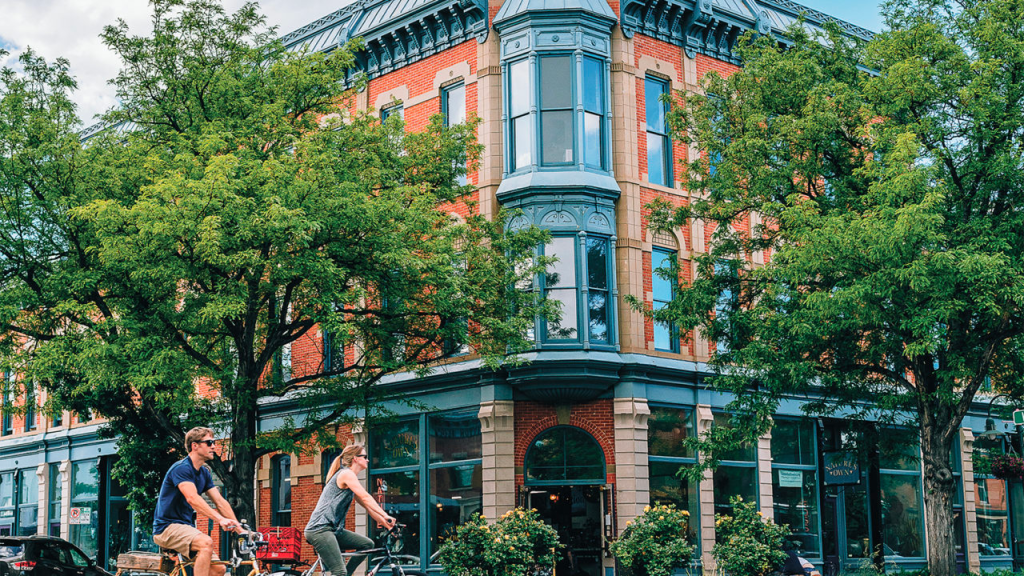
Photo by: The Insiders Guide to Fort Collins
Fort Collins, Colo.- Fort Collins, known as “Choice City,” checks all the boxes of a successful and happy city. With a variety of green spaces, large sidewalks and bike lanes, and open space, Fort Collins attracts waves of residents each year. This city welcomes you with a large variety of shops, live music, microbrewery industries, and outdoor amenities.
We translate our own ideas of happiness into our cities, so when our outlook on what makes us happy changes, our city begins to change with it. We see this in plenty of cities, such as New York, known for its bustling business atmosphere, vast entrainment options, and amazing food. New York started with minimal green space, yet throughout the years, the career-focused individual’s ideas of happiness shifted. Green spaces slowly appeared in the community, thus the creation of Central Park. Although New York has minimal green space, they actively implemented it into their community, making it a popular attraction for many citizens seeking a break from the day-to-day hustling.
Another aspect that makes a city successful is the access to alternate modes of transportation, such as large sidewalks, bike lanes, and buses. Thanks to Franklin Avery, Fort Collins is known for its large sidewalks (31 Things That Will Make You Love Fort Collins) Having these options makes commuting more accessible for citizens while adding a bonus by being environmentally friendly.
The Fort Collins Commuter Study aimed to learn about individual exposure to air pollutants when commuting and how it’s associated with mortality within the Fort Collins commuter community. Comparing commuting via motor vehicles and cycling, they concluded that the exposure to CO and BC was lower when cycling alternative routes that avoid motor vehicles. This study shows that implementing more alternative routes and modes of transportation for a town’s citizens not only helps the environment but positively affects the health of the people who live there as well. This makes biking or walking to an individual’s destination more desirable since there the sense of concern for one’s individual health is involved.
-
It’s the Little Things
By: Christina Quinones
Fort Collins, Colo.- There is a monumental question of whether a city can truly be happy. People do experience joy, but there has never been a city that can truly be called happy. It raises the question of whether one even exists. One thing is certain, though: a city is made up of many different parts, and the seemingly little things can have a huge impact on how our society functions and behaves.
The simple presence of public spaces have been proven to have a positive impact on the surrounding community. The article “Project for Public Spaces” writes that while public spaces themselves on the outside seem mediocre with no real impact but under the surface these are locations “where community comes alive, where bonds among neighbors are strengthened and where a sense of belonging is fostered.”
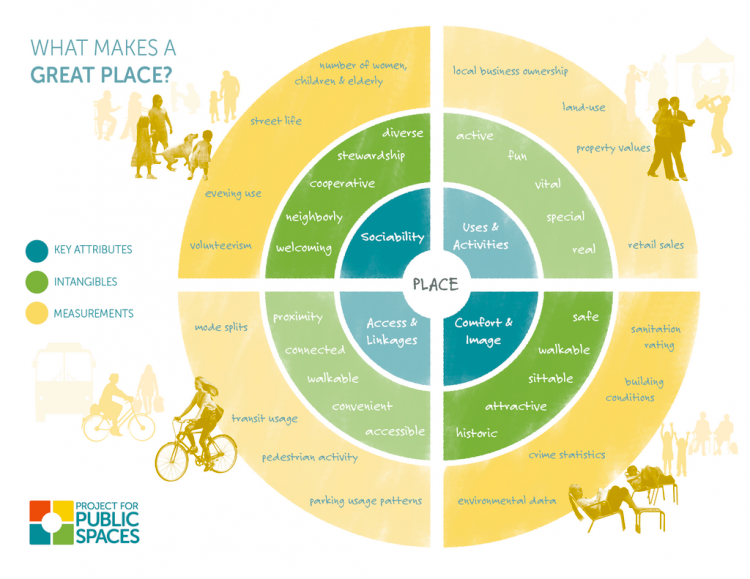
Attributes of good public spaces. Photo by: Project for Public Spaces
Moving from a big city, San Diego, to Fort Collins I was clearly able to see the differences public spaces have on society. Maybe I just didn’t go out enough in my hometown, but in Old Town there are always people using the public space even if it’s just to sit. These areas foster a sense of neighborhood belonging, which can result in a trustworthy, safe, and welcoming community.
According to the “Fort Collins History Connection,” in the 1880’s a business man named Havemeyer, also known as the “sugar king” built a factory that promoted social growth within Loveland but when asked to do the same in Fort Collins, he refused. Going forward a group of individuals, who by no means were wealthy, built “churches and schools, our Y. M. C. A. building and procured our street railway and park system,” stated by Carl Anderson in the Fort Collins History Connection article. While as of now these things seem insignificant but at the time they were revolutionary and a massive turning point that promoted social sustainability.
Every city has its own set of necessities and support, but when compared to others, including those that are comparable to Fort Collins in size and population density, like Hood River, Oregon, and St. George, Utah, they all have one thing in common: a strong sense of community. Communities must have access to basic amenities that inspire and motivate residents to leave the house and enjoy the outdoors, such as a nearby park or bike lanes. The seemingly little details are what give a city its joy.
-
What Makes a City Happy?
By: Lily Prielipp
Fort Collins, Colo.- Cities are most well-known for being dirty, chaotic, destructive, and overwhelmingly intolerable. What makes the busy city lifestyle attractive to individuals or families, and how do they maintain their happiness? Health and community well-being have a significant impact on the happiness of an urban center; moreover, sufficient health levels in a city promote a flourishing environment. Fort Collins, for instance, promotes individual well-being which benefits local businesses and bolsters a sense of trust among citizens of the Fort Collins community because of the utilization of outdoor spaces.
According to the United Nations for Sustainable Development, there are fundamental links between health/well-being and a sustainable environment, and the “facets of spatial design” are the main drivers for low or high measures of well-being (Barton & Grant, 2012). Commuters often face high levels of stress because of travel, noise, danger, insecurities, and a lack of time in nature. Fort Collins, however, emphasizes sustainable ways of living and fosters a rich community through promoting healthy living habits for residents. The current mayor, Jeni Arndt, focuses on cultivating an environment that sustains water, agriculture, small businesses, and public education.
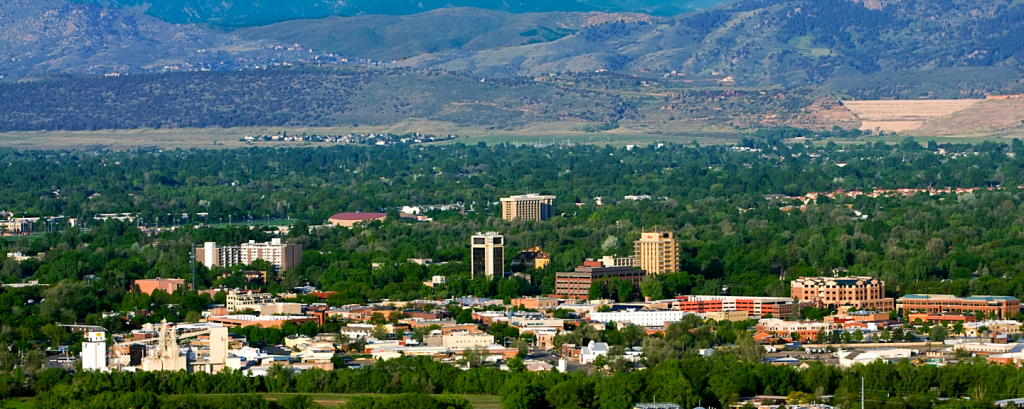
Photo by: Fort Collins, Colorado
Even through smaller actions, such as an incentive to turn off home irrigation systems by October 1st, Fort Collins promotes healthy city living on an individual level or through sustainable services. These services promote “community resilience” by leading sustainability through people, planet, and prosperity.
Urban places struggle with the balance between lifestyle efficiency and sustainability; likewise, residents’ health is often undermined by city development and there is no way for well-being to resurface in a rush-dominated culture. Cities should have “environmental mastery” and the ability to “thrive and navigate the world” (Montgomery, 2013). Fort Collins emphasizes sustainable activities, which demonstrates healthier living conditions and overall creates a happier city.
-
Community Instills Kindness
By: Caroline Pace
Fort Collins, Colo.- Walking with my mom from our hotel in Fort Collins to a local restaurant nestled in downtown, our impeccable sense of direction led us instead to a whimsical art gallery. Disoriented, we asked a nearby lady if she knew where our restaurant was located. The lady beamed at us and pointed us in the direction directly below the gallery, even offering to walk us to our destination.
Startled by the friendliness of this interaction, throughout my visit, I continued to be greeted by the kindness that illuminates within the residents. What makes this city so happy?
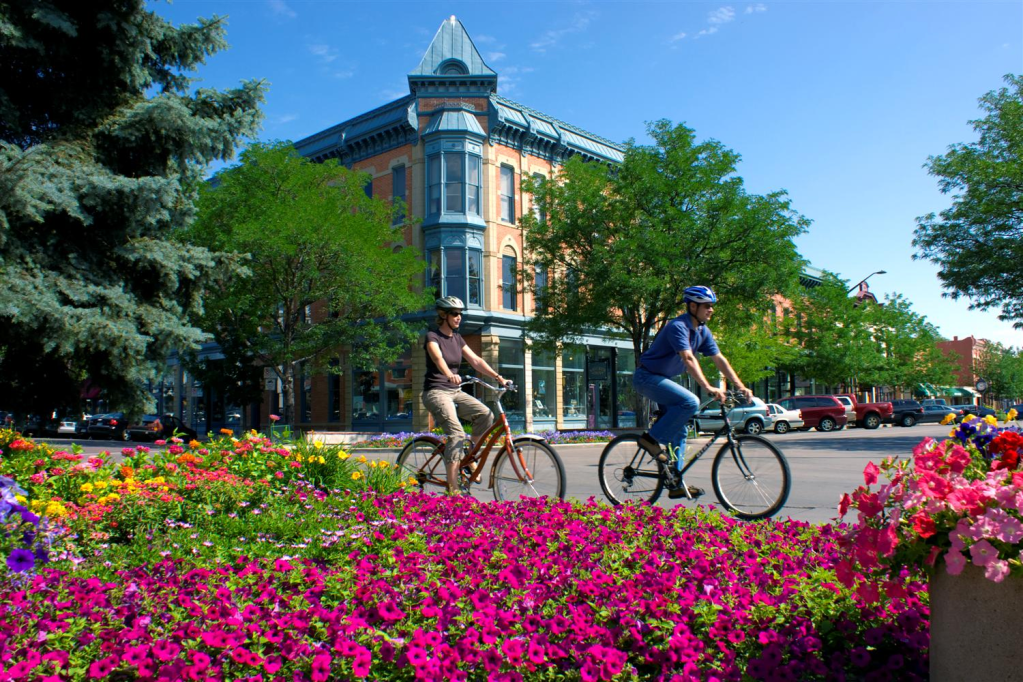
Photography of Old Town in Fort Collins, CO. Photo by: Fort Collins, 2009.
In cities, there is a consistent relationship between a strong sense of community and positive mental health. When cities have good community relationships, its residents’ are happier.
Old Town plays a big part in establishing community.
Historically a former military post, the area grew to become a charming community area. Currently, historical buildings like the Avery Building and the Avery House are still standing to remind residents of their history and establish a connection between Fort Collins residents and its cultural heritage.
The bright-colored shops and restaurants that line Old Town bring its residents together and increase community engagement that people of all ages can enjoy.
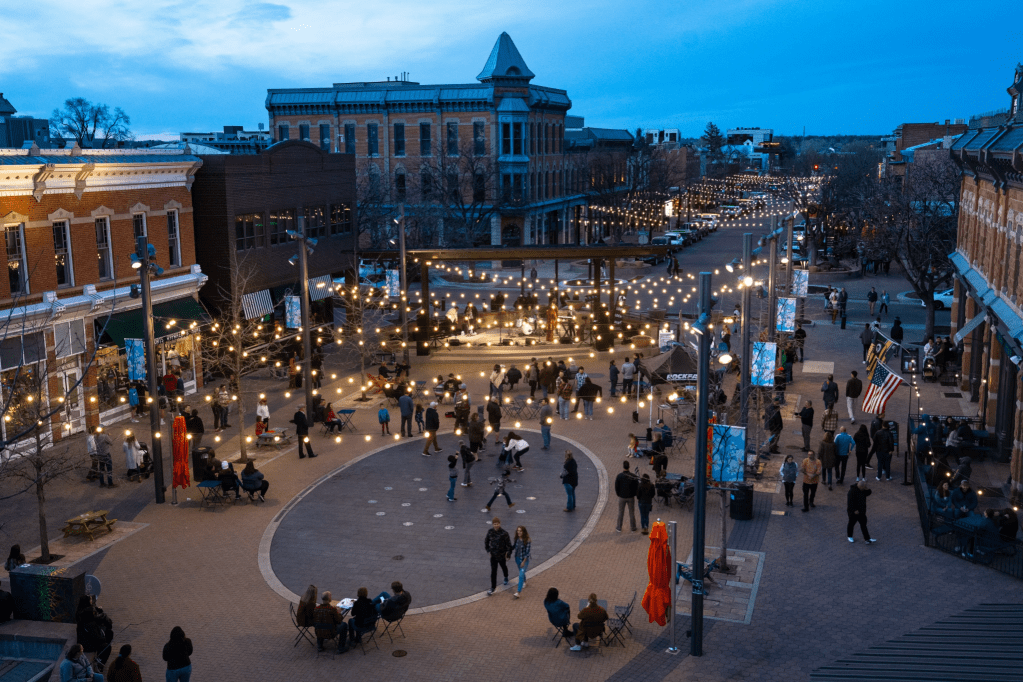
People roaming through Old Town Square, Fort Collins, Colorado. Photo by: Lucas Boland, 2023.
Similarly sized in population and rated the most miserable city in America, Pine Bluff, Arkansas, has more people leaving than coming. The reason? A low sense of community where people do not feel safe. In 2021 alone, 30 homicides were recorded in the town.
Unique places like Old Town grant its residents the luxury of happiness. A genuine kindness radiates through Fort Collins simply because its people have a strong sense of community.
-
Addicted to Walking
By: Jasmine Micijevic
Fort Collins, Colo.- Growing up in the burgeoning suburban town of Parker, Colorado, as a young teenager with a relentlessly overprotective mother fearful of other young adults’ driving habits, I became addicted to walking. The problem, I soon found, was that despite the ample sidewalks and freshly manicured grass in every town across America, I had nowhere to walk to. The most riveting adventure I could take was the 40-minute walk to Target, which became relatively uninspired after around the second time I attempted it.

This image shows a suburban Target. Photo by: Freight Waves (Shuttershock)
Even I had it better than my friends without driver’s licenses who lived in the upper-class neighborhoods tucked away in the outskirts of the town, secluded from anything remotely interesting or cultural (besides a sprawling members-only golf course, of course) with which to fill their free time. Wandering around my neighborhood day after day in the summers with nothing more stimulating than HOA-regulated grass and gardens of petunias I recognized as transplants from the local grocery store to look at, I wondered how so many people could endlessly criticize teenagers in this culture and age for spending so much time staring at a screen when our society has stolen away the most compelling aspect of living in a community: the experiences you can have simply by stepping outside.
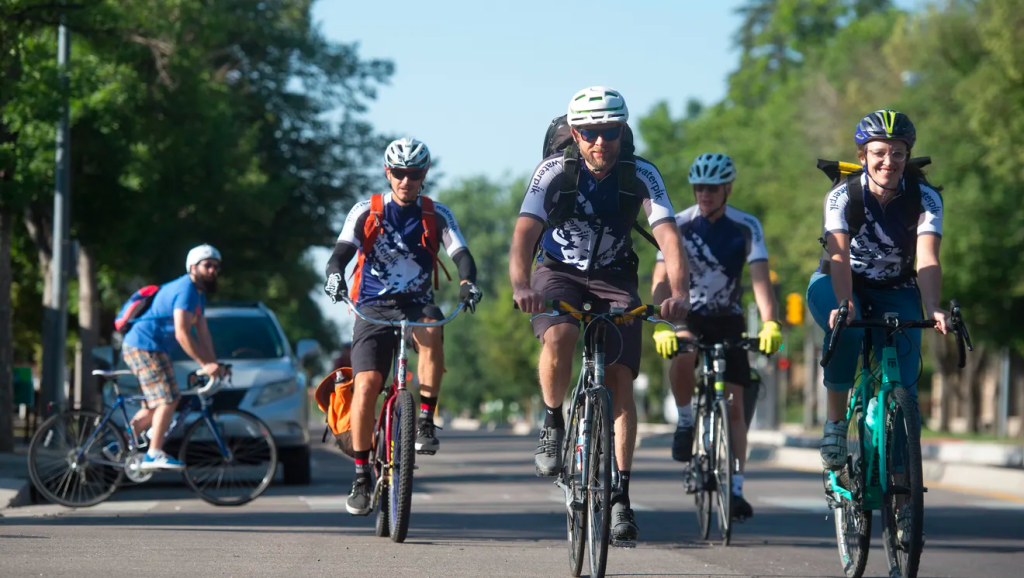
Bike to Work Day June 27, 2018. Photo by: Austin Humphreys
Car centrism is dominant in the United States – in 2021, 91.7% of households reported owning at least one vehicle with nearly 60% owning two or more. However, existing evidence overwhelmingly suggests a positive correlation between the ability to have unique experiences or connect with the place you live without needing to drive and overall happiness and life satisfaction.
A study conducted in Phoenix, Arizona found that “residents living in more objectively walkable neighborhoods reported higher life satisfaction,” even when other factors, such as safety and sociability, were taken into account. Similarly, in a study examining major cities in Greece, research revealed that walking and cycling are consistently associated with the highest satisfaction, whether or not time is controlled for.
One such town that touts this infrastructure is Fort Collins, Colorado, home to Colorado State University. Fort Collins is one of only five platinum-certified bicycle-friendly communities in the United States, where it is often faster or more convenient to bike than to drive. Although cars are still present within the city, it is not uncommon to see sidewalks bustling with pedestrians and bike lanes full of cyclists despite road traffic or time of day.
The accessibility of such activity combined with the vibrant and diverse opportunities for exploration and experience throughout the city generates an overwhelming sense of belonging and familiarity in many residents that lends itself to higher overall satisfaction. The Fort Collins transit agency is also supporting an initiative to temporarily keep its public transportation fare-free and accessible to all and is “currently involved in a study to determine whether to remain fare-free on a permanent basis.” Removing fares is a move towards equity and inclusion, and in tandem with well-developed bus routes and systems, it is yet another move to make the city more accessible.
Most residents own a car, but it is not unattainable to live there without some form of private motorized transportation, offering all residents the opportunity to increase their personal sustainability, health, and sense of connection. Although the success of public transit and walkability is not the primary determinant of life satisfaction in Fort Collins, it is an indispensable part of its infrastructure that contributes to residential happiness and place attachment. It may not be realistic to remove cars from our society entirely, but to implement this idea across the country would presumably serve as an undeniable improvement in public happiness.
-
Building Happiness in FoCo
By: Ben Michaels
Fort Collins, Colo.- Happiness. What is it? How do you get it? Why do we want it? For ages, people have tried their hardest to reach an emotion that makes us feel better. What if I told you that something as simple as a city’s architecture can make or break your happiness scale? Fort Collins has been using unique and pleasing architecture for almost 150 years, which has made Fort Collins a very attractive place to live.
Fort Collins has been a city with unique architecture ever since the city was founded. For example, this article states, “As the city matured, recreational and social facilities requisite for a significant urban area were constructed.” Overall, the economy in Fort Collins was on the rise, and lots of cool architecture allowed for relationships within the community. Furthermore, one of the most recognizable places in Fort Collins opened, called the Old Town.
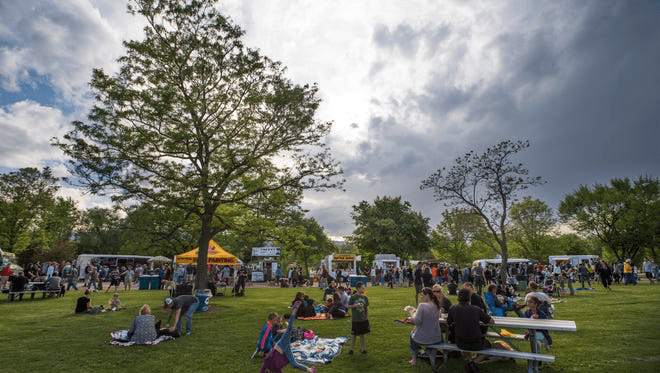
Fort Collins Food Trucks. Photo By: Austin Humphreys
Historic District. The area has large sidewalks and wide roads. This benefited the economy because it allowed people to walk around downtown and shop. Thus, people could interact with each other and create relationships in the community.
In the present day, the architecture and layout of Fort Collins continues to attract its citizens every day. Parks such as city parks lure the citizens to their large fields every single day. A special attribute of the city park is on Tuesdays in the summer when food trucks line the roads and hundreds of citizens congregate in the park to eat good food and socialize. This small event is essential to the economy and equity of Fort Collins because it boosts local businesses and provides an area for everyone to come together. In the Book “Happy City,” Montgomery says that “the greatest of human satisfactions lies in working and playing cooperatively with other people” (41). Thus, the unique layout of Fort Collins allows citizens to feel the “greatest of human satisfaction.” To conclude, Fort Collins’s architecture proved to be beneficial and helped turn the unique city into a thriving city with a happy community.
-
Why Fort Collins is a Happy City
By: Sarah McCain
Fort Collins, Colo.- Vibrant green leaves swayed in the cool morning breeze. A child screeched with delight, running away from its mother into the fountains sprouting from the ground. I glanced up at my mother, who gave me a small smile and led us into a café. It smelled like coffee and maple syrup. I could see the leaves swaying through the window and the children playing in the fountain. It felt comfortable, and the store felt happy.
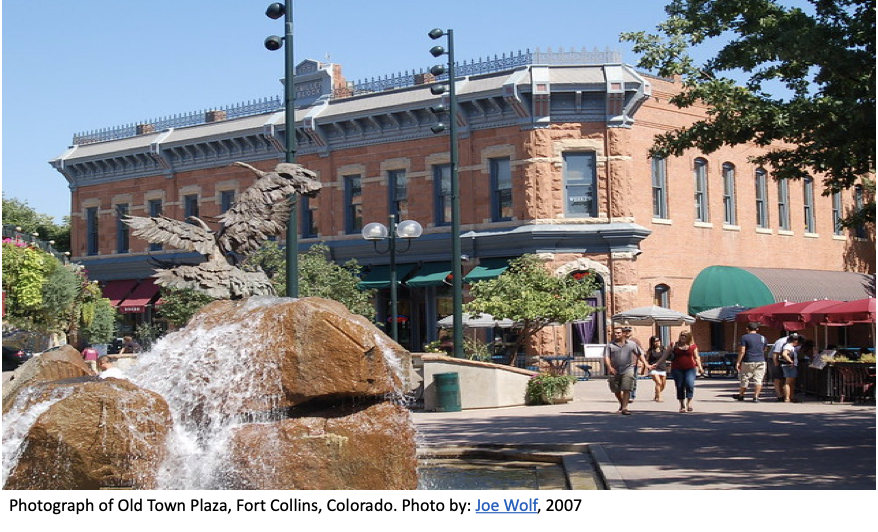
A city is only as good as the people in it. The people decide what features and amenities are provided. In Fort Collins, public spaces were deemed an important piece of the city. One study found that people who had access to public spaces were not only more mentally healthy but even had improved physical health. Fort Collins does a great job of incorporating public spaces into their city. A fountain can be found in the middle of a plaza in Old Town, something I noticed the first time I visited this area. The fountain provides a place for children to play and for parents and students to enjoy the outdoors, surrounded by shopping and people.
Fort Collins has historically excelled in creating public spaces. One of the first things the city did in 1881 was establish Lincoln Park. In general, the city has done a much better job of establishing public spaces than many other cities around the U.S. One example is College Station in Texas. This is another city with a college in it with its total square miles being 49.6, just a little under Fort Collins’ 58.47. Despite their similarities, Fort Collins has over 46 miles of paved trails while College Station only has about 42.
Overall, Fort Collins provides an abundance of public spaces for its citizens. Allowing, the adults, children, and students to have an overall positive experience in the city with access to the many parks and public areas. No city is perfect, but from the moment I stepped into Old Town, I knew this was a happy city.
-
The Beauty of Old Town
By: Julianna Lopez
Fort Collins, Colo.- I walk down those old brick roads underneath those fairy lights as a local band plays on the stage in the main plaza. Watching children run around with parents watching nearby as you enjoy your ice cream from Walrus, the local ice cream shop up the road. These town centers are what makes cities happy as they create a strong sense of community. With the rise of technology and urban sprawl, healthy relations within a community have become strained, leading to less happiness among urban centers. Yet, Fort Collins has done an amazing job with maintaining town centers as even with the constant development, the ‘Old Town’ still stands by the river Cache La Poudre, where Fort Collins began as Camp Collins, originally a small military outpost. Maintaining this historic area allows strong place attachment and a place for local businesses to thrive as large chains are kept from these community-building places.
Old Town is a district to be celebrated as it creates an economic hub that fuels social connections while still benefiting the overall city production. When it comes to happiness within the city, people need to be able to trust one another and feel safe within their streets. Fort Collins ‘Old Town’ has even inspired the likes of Walt Disney as a demonstration of what a town center and community should be. Humans need social connection and proximity to feel fulfilled in life, and relationships are known to have large impacts on happiness overall. This is exactly why these town centers are so essential to making urban areas happy again. Old Town is a wonderful town center that I recommend you visit when you get a chance, as it’s hard not to smile under those fairy lights.
-
The Power of Community: What Makes Fort Collins a Happy City?
By: Reagan Kuhn
Fort Collins, Colo.- From city planners to economists to Ancient Greek philosophers, the concept of how to achieve happiness in cities has always been a debate. Charles Montgomery, in his book Happy City, comes to the conclusion that it is human connection, above all else, that makes people happy in cities.
So, using this as a reference, is Fort Collins a happy city?
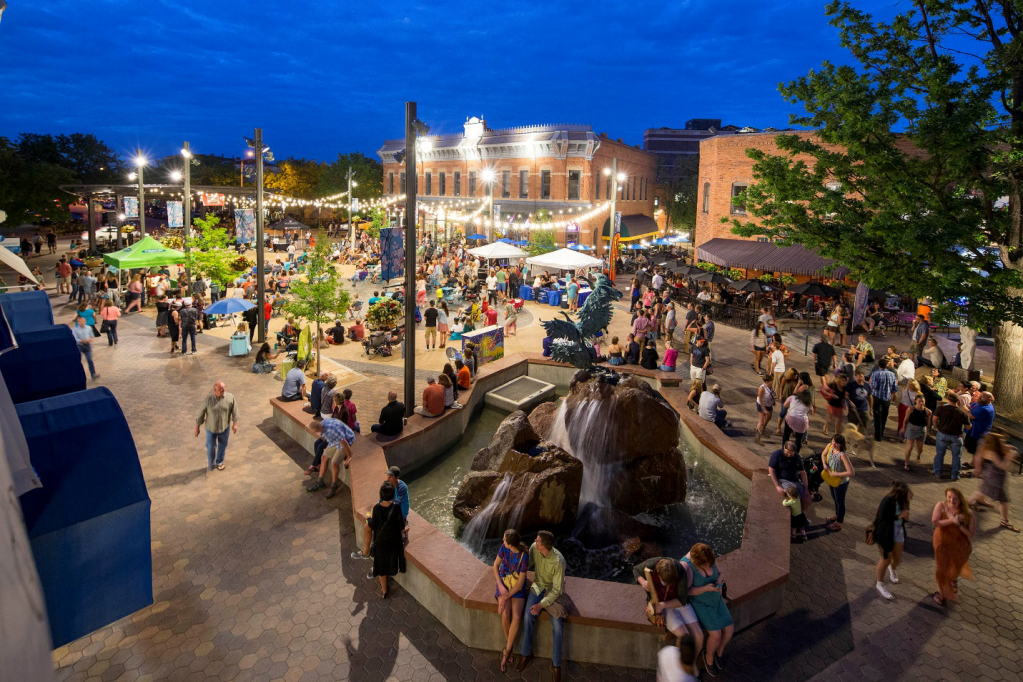
Old Town Square in Fort Collins, CO. Photo by: Downtown Development Authority
Fort Collins has a number of spaces that allow for interaction and connection between residents, including Old Town Square, numerous parks, and a public recreation center, for which the city deliberately went above and beyond during construction to fit the needs of the community.
This is important because, according to this study, spaces like those mentioned above result in citizens having a greater sense of community and trust in relation to their city, which correlates with better mental health and lower stress levels – they literally make people happier.
Systems like public transportation, biking trails, and walking trails, for which Fort Collins is ranked 3rd in the country, far above similarly-sized cities like Boulder and Colorado Springs, also have this effect. They increase connections between city residents, resulting in lower levels of depression, and can be used to combat urban isolation. I myself have experienced this benefit – even the struggles of university seem more bearable when I can bike to Old Town with some friends at the end of a long day.
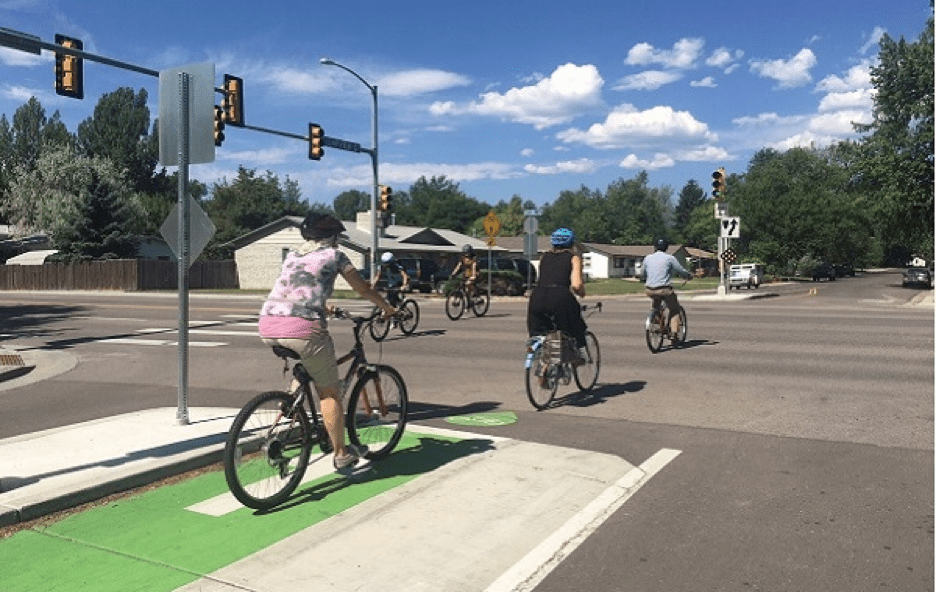
Pitkin Bikeway in Fort Collins, CO. Photo by: City of Fort Collins
Connection is not the only way that community spaces and public transport in Fort Collins facilitate happiness, however. They also increase equity among citizens by providing equal access to jobs and events, even if individuals do not own private vehicles, lessening urban isolation and combating poverty and unemployment. Not only that, but these systems also often have a positive impact on the environment.
While Fort Collins is far from perfect, I believe that its facilitation of community connection, equity, and environmental benefits as a result of implementing community spaces and public transportation systems show that it is on its way to becoming a happy ci
-
Finding Happiness in Urban Living Requires Finding Each Other First
By: Sean Kirkpatrick
Fort Collins, Colo.- Solitary confinement: a punishment that denies misbehaving prisoners from any modicum of social contact, yet social deprivation is shown to actually worsen the situation. It may then be troubling and slightly paradoxical to know that in our modern way of life in densely populated cities, 72% of us report feeling lonely.
I can personally attest to this reality. By the time I got home from high school in the late afternoon, the most alluring destination on Earth was my living room’s weathered couch, with its lonely feelings and all.
Extrapolate this behavioral pattern—of coming home to our own private lives devoid of conviviality—to the rest of America, and it is clear to see what is fueling the loneliness epidemic in America.
In the recently acclaimed book Happy City, urbanist Charles Montgomery states, “the most important psychological effect of the city is the way in which it moderates our relationships with other people.” For me and millions of other Americans, our cities fail to get us out of the house.
But when I moved to Fort Collins this year, it felt like the entire loneliness paradigm had been flipped on its head. In a peer-reviewed article by Aleksandra Kaźmierczak, she states that parks “contribute to the development of new social ties and strengthen existing contacts.”
Indeed, according to the 2021 Fort Collins ReCreate: Parks and Recreation Master Plan, 79% of Fort Collins residents felt that their neighborhoods had enough public spaces and parks within a walkable distance—this is on top of Fort Collins consistently being ranked among the top happiest cities. To show a quick comparison: Fort Collins has 54.3 sq mi of land, 169,810 residents, and is home to 50 parks, while similarly sized Hampton, Virginia, has 51 sq mi of land, 137,148 residents, and only around 10 parks. With a history rooted in the City Beautiful movement of the late 1800s, it makes sense Fort Collins jumps ahead in this regard.
Moving to a city with more public spaces helped me feel happier, and I would strongly recommend other Americans to do the same.
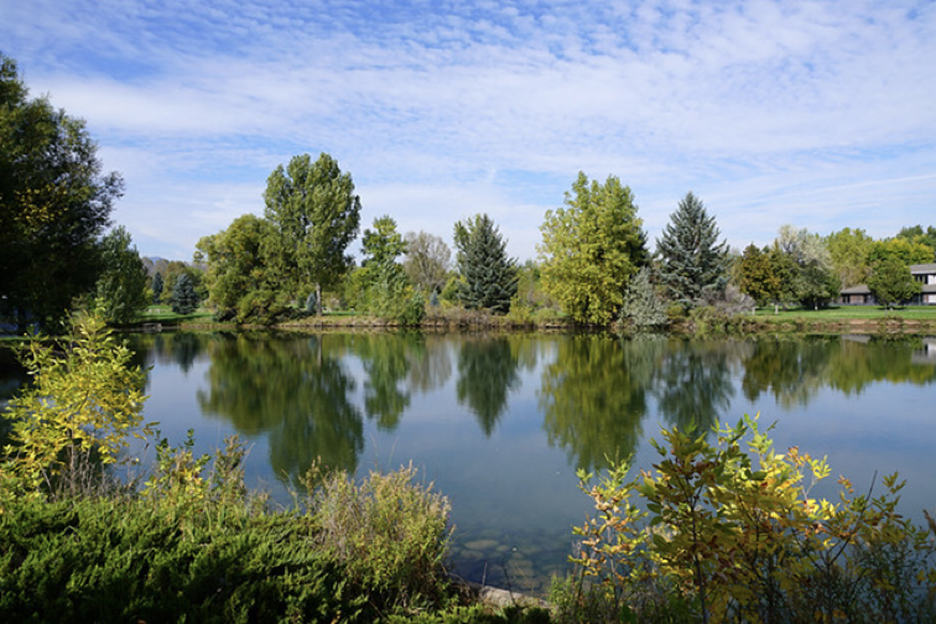
Roland Moore Park in the Fall. Photo by: City of Fort Collins

A celebration of Old Town’s holiday lighting. Photo by: City of Fort Collins, 2014
-
Subscribe
Subscribed
Already have a WordPress.com account? Log in now.
 NoCo Convos