-
Balancing Daily Life
Ram Life
A student-athlete life is busier now than ever, as Colorado State University’s (CSU) Head Volleyball Coach Emily Kohan said from her observations and experiences. This is why RAM Life was created at CSU, with Sierra Puente at the helm to guide student-athletes through the strenuous process in the moment and also to prepare them for life after college.
Originating as a football-specific program, RAM Life turned into an athletics-wide operation. Nearing its first full year of serving the entire student-athlete body, the program focuses on career development, community service and personal enhancement. The focus on post-academic and athletic success is a fairly new field, and according to Puente this is something showing up more in Power Five schools but remains fairly unseen in Division Two.
Sierra Puente
Puente is currently a resource for about 350 student-athletes. While it is a huge undertaking for Puente, she can split the hundreds of students up for when each sport is in season. Every sport at CSU is accounted for, and Puente does her best to work with every athlete. The use of RAM Life is a bit of a mixed bag, as some students use the resource more than others.
As with mental health services and the willingness to utilize them according to a survey done by the NCAA, it appears that some students struggle with using RAM Life as well. Puente has looked for ways to get student-athletes more engaged with the program.
One major issue Puente has identified is time. The work she does with each athlete takes time away from their already packed schedule, so most of her work is done between 6:30 pm to 8 pm to accommodate their schedule.
“So that’s an issue that I had worked on, and one way I really tried to help that with them is by making stuff meaningful and impactful,” Puente said.
To assist with making things “meaningful” and “impactful,” RAM Life works with outside organizations. Canvas Credit Union has come in to provide financial literacy instruction, a big volunteer event in the summer with the Boys and Girls Club and has had a Special Olympics event before a football game this year. RAM Life has also been doing Reading with the Rams which involves student-athletes reading to children at four Poudre School District schools a month.
On top of this, RAM Life also holds a career fair for student-athletes, spirit squads, band members and managers. Freshmen through seniors also have to attend at least one cohort workshop each year.
Although these services are new to CSU, they serve an important role in the student-athlete body. As previously mentioned, Kohan says this adds more responsibility to an already busy schedule.
Emily Kohan
Kohan has a unique perspective as the current head volleyball coach at CSU. Kohan has experienced two sides of the student-athlete journey, seeing her team and their navigation through balancing their sport, education and life while also having experienced it herself while playing volleyball for the University of Iowa before graduating in 2009. Saying that the student-athlete experience has remained similar in some ways, Kohan has identified new changes and challenges as well.
“I think it’s only continued to get busier and busier for student-athletes and you know, the time demands that are required of them,” Kohan said while comparing her experience to what her current team has to deal with.
Class attendance coupled with academic tutoring, makeup exams, volunteer events, camps, hitting up the training room and gym, doctors appointments and now the new Name, Image and Likeness (NIL) rule from the NCAA that allows students to make a brand from their name piled on top of the 20-hour-a-week practice and competition commitment for the student-athlete is without a doubt a demanding schedule. Fortunately, Kohan says that the resources for student-athletes have grown larger than when she was in college.
Currently, there are several programs in place specifically for each athletic team. The volleyball team has tutors, mental health counselors, trainers, weight room coach, a strength and conditioning coach, a nutritionist and a psychologist specializing in sports on top of RAM Life.
Kohan points out the new trend with colleges investing in mental health professionals. According to Kohan, bigger schools have upwards of 15 mental health counselors that tend to the needs of student-athletes. Telling a story about how her team used the counseling resources after two tragic losses in the families of her players, Kohan has firsthand experience using these resources.
While Kohan and her team were willing to use the resources at their disposal, this is not always the case when looking at the NCAA as a whole. In a survey conducted by the NCAA, out of 9,808 student-athletes surveyed, only 47% said they would be comfortable with seeking mental health assistance for themselves. Only 63% of student-athletes believe that their fellow teammates take mental health concerns seriously, and 53% of student-athletes feel that their coaches take mental health concerns seriously.
Clinical Solutions Consultant at Mantra Health Dr. Liz Jodoin says that student-athletes are less likely to seek mental health assistance than non-student-athletes, claiming that they are typically conditioned to work through both physical and mental pain. Jodoin also says that this can exacerbate pre-existing mental conditions.
Fortunately, it seems that Kohan and her team are willing to use the resources provided, but it may not be the case for other teams at the university. With less than half of the student-athlete body nationwide willing to seek counseling, it would be difficult to say with certainty that Colorado State is an outlier. The stigma of seeking mental health services appears to potentially be more potent in the world of student athletics.
Since Colorado State has added mental health counseling specific to student-athletes, Kohan says the coaching job has grown beyond simply coaching a team.
“I think, you know, it really has turned into head coaches kind of being a CEO, where we are managing and meeting with a lot of the experts in the different, like, silos that they are in charge of,” Kohan said.
Adapting to NIL: Green and Gold Guard
The Green and Gold Guard, a 501(c)3 nonprofit, has attempted to make CSU a marketable school for students on the college search. This official NIL collective has a fairly simple goal: Get student-athletes involved with the community in a way that is mutually beneficial at a monetary level. While the collective is a great way for student-athletes at CSU to market themselves and become profitable, they must do so while being a full-time student and athlete.
Essentially working as an unofficial way to bring money into a particular athletic program, the Green and Gold offers a way to pledge a certain amount of money to individual sports, one example being “football pledge per point.” The money would go into a nonprofit fund that ultimately ends up being used for each athletic program.
Additionally, student-athletes can become a member of the Green and Gold club, such as Isaiha Stevens on the men’s basketball team. This provides that aforementioned “market” aspect so that a player can show that they are willing to partner with businesses and companies. The website offers insight into the stories of athletes who choose to advertise themselves.
With the new NIL rule in place, the Green and Gold simply exists to make it easier for student-athletes to make money off their talents. Much like RAM Life and the other programs provided to teams, the Green and Gold looks to guide student-athletes through another presented hoop. If the NIL exists, student-athletes are going to add it to their to-do list.
-
Name, Image and Likeness
Student-athletes’ lives are busier than ever in 2023. With Name, Image and Likeness being enacted on January 1, 2023, in Colorado, Colorado State University (CSU) athletes are experiencing monetary compensation for their athletic accomplishments for the first time.
What is NIL?
Name, Image and Likeness, or NIL is the way in which college athletes are able to gain financial compensation for their athletic performance through marketing and promotion. These marketing and promotional ventures can come in the form of signing autographs, endorsing products, participating in advertisement campaigns, posting on various social media platforms, instructing camps or lessons or kick-starting their own businesses.
“I happened to be at Texas A&M while Johnny Manziel was there. If Johnny was playing right now in college football, he would be like some of these guys right now, they’re making two or three million a year to play,” Senior Associate A.D. and Football Chief of Staff at Colorado State University Tim Cassidy said at a sports public relations panel.
“The thing was set up on name, image and likeness (NIL). It wasn’t set up on getting a paycheck in the mailbox every week. That’s kind of where it’s going. I think that’s very scary.”
Cassidy says that going to college simply for a paycheck is where the future is headed, and that the current trajectory of monetary incentivization is the wrong direction. From a competitive standpoint, in Cassidy’s eyes, whoever has the most money wins. In student-athletes’ eyes, it is a market that must be worked like a career.
As NIL will continue to grow and progress, so will the guidelines. Currently, the rules surrounding Name, Image and Likeness and how the universities can be involved are fairly straightforward and open to interpretation and can vary by state. Per the NCAA, the guidelines are:
- Collegiate athletes can participate in NIL activities if they agree with the law of the state in which the school is located.
- The school is in charge of determining if those activities align with state law.
- Student-athletes should report that the NIL activities are consistent with the state law to their school.
- Athletes who attend a school in a state without the NIL law in place can engage in NIL activities without violating NCAA rules relating to NIL.
- Athletes have access to and can use a professional service provider to help them with their name, image and likeness.
- Some (not all) state laws prohibit athletes from endorsing alcohol, tobacco, or gambling products
- Some (not all) state laws prohibit athletes from using their school logo or other copyrighted material in their endorsements
With all of this in mind, the addition of Name, Image and Likeness doesn’t mean:
- College coaches can offer money to prospective players as an incentive to play at their school.
- Athletes receive financial compensation directly from their university derived from their athletic ability and/or achievements.
Where did NIL come from?
NIL was created with the intention of allowing collegiate athletes to benefit financially from their name, image and likeness. NIL can find roots in the class-action lawsuit O’Bannon v. NCAA from 2015.
In 2009, an All-American basketball player from UCLA named Ed O’Bannon sued the NCAA and the Collegiate Licensing Company (CLC) for using his name and image in an Electronic Arts (EA) video game.
O’Bannon had never authorized the use of his likeness for the video game or received compensation for his image. He argued that the current NCAA rules prevented student-athletes from financially benefitting from their name, image and likeness and it was an illegal restraint of trade under Section 1 of the Sherman Act which reads:
“Every contact, combination in the form of trust or otherwise, or conspiracy, in restraint of trade or commerce among the several States, or with foreign nations, is declared to be illegal.”
The court ruled in O’Bannon’s favor after agreeing that the disallowing of student-athletes to receive monetary compensation violated Section 1 of the Sherman Act.The court then declared that Division One schools should allow two things.
The first one being the allowance of awarding stipends to student-athletes to the full extent of the cost of their attendance and making up for slack in their grants-in-aid. The second one is the permission for schools to hold a portion of their licesncing revenue in trust and distributed to student-athletes and are evenly distributed after they leave college.
On March 20, 2020, Colorado Governor, Jared Polis signed Bill 123 in law allowing college athletes to profit off of their name, image and likeness. The bill went into effect on the first of this year, 2023, and makes Colorado the second state in the nation to allow NIL deals.
California was the first state to pass a similar bill in September 2019. At the time of its passing, 20 other states were also in the process of passing similar laws.
Why is NIL important?
NIL is not only important to the student-athletes themselves but also the schools they attend. Student-athletes at Division I schools could be viewed as part of a college’s advertising campaign. Colleges and universities can use popular, fan-favorite student-athletes to their advantage in bringing in future athletes, which then benefits the school by filling sets in the stadium and in the classroom.
In the short time it’s been around, NIL has produced many benefits to colleges and universities around the nation. Many student-athletes are making money, and not just athletes who compete in the high-revenue sports.
Women’s collegiate sports are also noticing many positives. Women have been very active on social media andbrought more attention to female athletics. One of the biggest women in sport utilizing NIL is LSU gymnast Olivia Dunne who has over 6 million social media followers.
Another huge positive is that athletic talent and ability is becoming more spread out as opposed to concentrated. Before NIL, monetary benefits was a huge deciding factor for athletes in which school they were going to attend and play for. Now, athletes have the chance to make their own money wherever they choose to go.
The Green and Gold Guard
One way that Colorado State University has utilized the NIL is through the Green and Gold Guard. The Green and Gold Guard is Colorado State’s official NIL collective and is built upon empowering, engaging, enhancing, and enriching the lives of Colorado State student-athletes. CSU athletes are using the Green and Gold Guard to participate in opportunities and events that allow them to connect and support the local community of Fort Collins.
-
Indigenous Voices Speak Out Against Media Misrepresentation
In a world inundated with information, the media is often seen as a conduit for knowledge and ideas, shaping public perceptions through various channels. However, this seemingly omnipotent force is not without its shortcomings, notably in the realm of misrepresentation.
Taylor Monteau, a member of the Chippewa Cree Tribe of Rocky Boy, Montana, and the Onondaga Tribe of Haudenosaunee Iroquois Six Nations, sheds light on the pervasive misrepresentation of Indigenous peoples in the media, a phenomenon she believes has persisted since the dawn of media itself.
Monteau points to historical examples such as old westerns, where Indigenous people were often depicted as ‘savages’ or a ‘dying breed.’ She also highlights contemporary instances, citing the misrepresentation of the Dakota Access Pipeline protests, a movement largely led by The Standing Rock Sioux and other tribes, concerned about the environmental impact on their lands and water supplies.
Despite recent strides in minority representation on screen, a closer look at Nielsen data for the 2021-2022 TV season reveals a stark reality. While 78% of the top 1,500 programs claim some inclusivity, Indigenous groups represent a mere 0.1% of total broadcast representation.
Monteau attributes this to colonialism, stating, “[We] pose a threat to the colonial agenda. Our very existence is antithetical to the goals of capitalism, of privatization, of white supremacy.”
The historical context of the strained relationship between Native tribes and colonizers, began with the English pilgrimages in 1607, further emphasizes the deep-rooted issues. As colonists moved westward, Native peoples were subjected to violence, relocation, and removal, leading to the establishment of reservations where many tribes reside today.
Treaties between the U.S. government and tribal nations highlight the broken promises and the contemporary significance of Native issues. But despite the urgent nature of these issues, media coverage remains notably scarce.
The lack of reporting is attributed to racism and media bias, with surveys indicating that a significant portion of the general public believes Native Americans don’t experience discrimination today. The invisibility of Native cultures in mainstream media contributes to biased perceptions, perpetuating stereotypes and erasing contemporary Native experiences.
So, what can society do to combat this trend?
Beth Wright, a staff attorney at the Native American Rights Fund, emphasizes the importance of focusing on the accomplishments and achievements of Indigenous peoples in media coverage.
Monteau suggests uplifting Indigenous voices, emphasizing the value of their knowledge, sciences, and philosophies. Cynthia Miller-Idriss, author of Hate In The Homeland, encourages raising awareness and discussing these issues, believing that people being made aware is the first step toward change.
Sources:
Tay Monteau, 21, English major with a minor in Indigenous Studies at Colorado State University in Fort Collins, CO
Beth Wright, Staff Attorney for Native American Rights Fund (NARF)
Cynthia Miller-Idriss, author of Hate In The Homeland.
https://variety.com/2021/tv/news/representation-high-inaccurate-diversity-nielsen-1235129378/
-
Faith and Advocacy: The Story of a Northern Colorado Pastor Challenging Stereotypes and Fostering Acceptance
FORT COLLINS, Colo. — In the peripheral, the brick walls and wooden cross of the MCC Family in Christ Church look ordinary, blending seamlessly into other local denominations.
Despite its appearance, the Church has thrown aside conservative theology, focusing on challenging stereotypes and fostering acceptance.
At the helm of it all is Reverend John Case, A pastor devoted to empowering the LGBTQ+ community through his sermons and initiatives.
While Reverend Case has always had a unique perspective on faith, he has faced trials and tribulations to determine his stance as an advocate.
“I wound up being a Minister with a very conservative church,” John Case said. “But I didn’t really fit in there — I didn’t believe The conservative side of it, you know, but the God and everything, I could accept.
While Case was learning to coexist as a pastor within a conservative church, he soon received news that his son was gay. The church told Case’s son that he could either “go back in the closet or Leave the church.”
What ensued after would reshape the course of Case’s entire life.
“Finally, I cornered [my son] one day and said, what are you Going to do?” Case said as he perked up and began to lean slightly closer. “‘Well, I want to fight it,’ he said. ‘Okay, are you going to win?’ I asked him — As we both know, that’s probably not going to happen. So why don’t you save your emotional strength? Let Dad fight this one out, and I’ve been fighting ever since.”
Undeterred by the ultimatum handed to his son, Case had to work out how to support him best.
“My wife and I got involved with Pflag,” Case said. “[The ministry] responded, ‘P flags is an enemy to the church,’ Two weeks later, I sent them my resignation.”
This incident would shape the course of Case’s ministry into an unwavering force for change, determined to reconcile his faith with unconditional love.
Soon after, Case was invited to join the Board of PFLAG in Fort Collins, an organization “dedicated to supporting, educating, and advocating for LGBTQ+ people and their families.”
Through his work at PFLAG, Case helped institute Northern Colorado’s first Pride Event. As he sat at the event, surrounded by love and inclusion, he questioned his ideals further.
“How is it that I can wake up and feel so comfortable and so safe among people that I’m supposed to be afraid of? Case said. “From that point on, I said the people with love are the ones I’m supposed to be afraid of — Instead of the ones that want me to be afraid. That got me from wanting to support to, have to, is probably the right terminology.”
Determined to make Fort Collins a pillar of inclusivity, Case joined the board of the Lamda Community Center. Despite his efforts, he had yet to see strides in social justice within the church. This led Case to become a Pastor at MCC Family in Christ Church in Fort Collins.
His views of Christianity differ markedly from traditional conservative teachings, embracing a theology centered on love, acceptance, and breaking down barriers of prejudice.
“I like to push people to the point of Christianity is nice, but it’s not total — It’s a single approach to a cosmic reality, Case said, “The cosmos, both visible and invisible, beyond our comprehension is about as close as we can get to defining God. Is there gender there? Only if you reflect your own gender on it.”
Although MCC Family in Christ Church in Fort Collins accepts all who enter its doors, many people are still skeptical of the church and Christianity because of the harm it has caused the LGBTQ+ community.
“I’ve seen many of my friends hurt by the church,” said MSU senior Sydney Schmelzer, who also happens to be a member of the LGBTQ+ community. “I would say that more than half of the gay people I know have felt isolated or attacked by the church because of their sexual preference or sexuality.”
Although he has tirelessly worked on making his denomination a safe and inclusive space, Case still struggles to fight the reasonable stigma of the church in its association with the LGBTQ+ community.
“When we’re talking about the church, there’s too many people that have been impacted, an awful lot in their youth,” Case said. “The verbiage of what is truth is probably one of the most difficult to understand and most damaging things that we teach our children — You’re really not helping them understand that their world is going to change. The more you learn, the more you’re going to see the old rules aren’t as solid as they were initially presented.”
As Reverend Case continues to inspire many with his compassion and wisdom, he will always strive to do more and listen to those who need it.
“Don’t be so hard on yourself because someone else is hard on you,” Case said. “Look at what you can do, do it well, and be proud of it — and if you need help, ask for it and find the people who will listen.”
-
Connecting Communities: Fort Collins’ Blueprint for Urban Trust
By: Annabelle Thomas
Fort Collins, Colo.- Do you trust that if you dropped your wallet, someone in your city would return it? As it turns out, the answer to that question is an excellent indicator of whether or not your city is happy. In the book, Happy City, Montgomery explains that places where people trust each other “always score highest for life satisfaction”. One of the main ways cities can promote trust is to emphasize public spaces and walkability which allow people to gather, meet their neighbors, and make memories together. Additionally, this focus on connections promotes equity by providing equal access to necessities and comforts. Serving as a prime example of how urban planning can foster trust and promote urban happiness is Fort Collins, a city whose downtown area has a plethora of local businesses, outdoor areas, and, of course, delicious ice cream.
Human connection is a vital factor for happiness. In the United States however we chase the “American Dream” of a suburban house, a big backyard, and at least two cars. Unfortunately, the focus here is on getting further away from each other. We seem to think that the more space we have to ourselves the happier we’ll be, but research shows that this is not the case. After one’s income is enough to afford basic needs and pleasures, increases in happiness have much more to do with human connections and trust. According to this New York Times article, the happiest countries most notably “believe in one another and their governments”. Interactions that foster connections aren’t encouraged when everyone can get in their cars and shut out the world, but when communities have everything within walking or biking distance people get to know those around them.
Interestingly, Disney’s Main Street USA was modeled after the town of Fort Collins, designed to be engaging through its walkable nature and variety of welcoming shops. Local businesses enhance accessibility, create a space where people want to get to know each other, and give each community a uniqueness to bond over.
Fort Collins persistence to build safe bike paths aids those without cars, the parks and open spaces promote social connections, and paintings and pianos around town make art accessible. People feel included here, like they’re a part of the whole. This survey showed that trust and a “sense of belonging” strongly contribute to well-being and happiness, which Fort Collins continues to promote through these various avenues. In sum, people flourish with inclusion and connection, which are developed through Fort Collins’ exemplary model of people oriented design.
-
Driving Ourselves to Insanity
By: Lindsay Barr
Fort Collins, Colo.- If you were to ask someone about the happiest time of their life, the responses might include a birth, a wedding, or maybe meeting the love of your life. What you’re never going to hear is: “Oh yeah, it’s definitely my drive to work every morning.” Of course not! However, it is readily proven that the everyday, mundane commute is going to have one of the largest impacts on total life health and happiness. And what is going to be the main influence? The length. If you want to have a happy city, then a key aspect will be a short commute.
In my own life, my commute is both the best and the worst part of my day. I’ll wake up, go through my school day, and hop on my bike to get to my workout… 30 minutes away by bike. It’s so beautiful! I get to see the changing leaves, take the beautiful bike trail, see the neighborhood and the dogs, and look at the ducks in the pond by the Spring Creek Trail! It is absolutely the most exhausting and draining part of my day, trying to find positivity when all I want is to lay in the grass and sleep forever.
The truth is, my bike is so much better than a car. If you drive in a car, you are quite literally putting a barrier between yourself and the community around you. Every. Single. Day. When an audience is surveyed, the commute has the lowest happiness rating out of any daily task, lower than housework or a job. In truth, the best commute is a shorter one- though not nonexistent! It is still proven to have important psychological effects for a routine of preparation or decompression between home life and work. The happy medium, for the length of a commute, is around 16 minutes.
In Fort Collins? The commute is a bit of a brag. Who else has heard (many times) about our awards for being a platinum level bike-friendly city? There’s no need for a car and a long, lonely commute when you have more than 289 miles of beautiful trails in every direction. If you do still need one to get around, you’ll find that Fort Collins will have much shorter commute times, likely because of the encouragement of other options, and the urban design of a grid system to provide many routes. As a city of 57 mi2, we can see that the most surveyed commute time is 10-14 minutes (right in our best happiness range!), compared to another city of the same size, Garland, TX, which has the most commute times at 30-34 minutes.
Because health and happiness have been seen to link so closely with these commute times, it is accurate to say that Fort Collins, as a community, is happy and successful partly due to their success in the regulation of commute and traffic and their support of other forms of transportation.

Traffic Backup on I-95 North at the Intersection with the Downtown Expressway in Richmond. Photo by: D. Allen Covey, 2002.
-
Main Street U.S.A or Communal Downtown: Which is Truly the “Happiest Place on Earth”?
By: Max Zenk
Fort Collins, Colo.- Fort Collins, Colorado, is known nationally for its historical Old Town roots and its frequent comparison to the magical essence of Disneyland’s Main Street U.S.A. As Coloradoan writer Erin Udell explains, Old Town, Fort Collins “…inspired the ultimate urban fantasy… frothy row of gingerbread storefronts…” when describing Old Town’s influence on Disneyland’s design. Although the appearance is uncanny, the question still lies: is the picture-perfect city truly the happiest place on earth?
As a current resident of Fort Collins, I have discovered the historic downtown sector and its emphasis on the value of real connection and community, contrary to physical appeal. Contradictory to Disneyland’s plotted mysticality, Old Town, Fort Collins is a real downtown with a strong sense of community through an extensive web of small businesses. They have created a booming economy of small boutiques and corner stores while also keeping the community feeling many Fort Collins residents attribute to their attachment to the city. Similarly, social scientists Litvin and DiForio attribute the charm of downtowns, namely King Street in Charleston, to “…new restaurants, local boutiques, and regional and national stores added to the traditional mix of local merchants…”. Fort Collins fulfills this ideology by providing access to both essential chains and small shops within close proximity.
Furthermore, the strong backing for small businesses diversifies the ownership in Fort Collins and provides more extensive opportunities for minority and female-owned businesses. This is crucial to the success of Old Town because it further demonstrates the city’s commitment to serving those of all ethnic and economic backgrounds and creates a wider variety of stores and retailers in the district. As society progresses into the future, the importance of an ‘archaic’ downtown structure on communal health and happiness will continue to develop into an ever more pressing concern with the necessity for national action, truly demonstrating the strong differentiation between the physical mysticality of Main Street U.S.A. and the true communality of Old Town, Fort Collins.
-
Fort Collins’ Generational Preferences
By: Max Wick
Fort Collins, Colo.- What do you think makes people so attached to Fort Collins? Is it Oldtown? Horsetooth? The people? As simple as it sounds, one of the most influential factors on people’s love for Fort Collins is the city layout. It is highly dependent on the person’s age as to what part of the cityscape is important to them. I found that younger generations are more influenced by a sense of place and older generations had a higher affinity for the level of performance of a town, both of which Fort Collins does very well.
Younger generations thrive with the presence of open green spaces and amenities. The key is that these have to be easily available to them, whether this be big sidewalks, few cars, or safer bike lanes. This also tends to appeal to the slightly older generations as their parents know that they are safe. Fort Collins supplies many shops and stores as well as parks that appeal to kids. The key is that these are sprinkled throughout town and easy to get to. Fort Collins is known for its long and wide sidewalks, as well as its bike lanes that are separated from the road. This accessible layout increases the younger generations’ place attachment exponentially.
Older generations tend to value the performance of a town over all else. These generations looked for the presence of good schools, quality government, and affordable healthcare in a place to live. Fort Collins has proof of a great business and performance scene, as it was awarded the Malcolm Baldrige award by the US Secretary of Commerce, which recognizes this high-quality scene. This greatly increases people’s respect and affinity for Fort Collins.
A few other slightly smaller factors are that of the presence of various outdoor activities, which Fort Collins has an abundance of. The ease of access to all amenities, green spaces, and outdoor activities makes the opportunity for place attachment easy. People’s love of Fort Collins heavily relies on its urban layout.
-
Why There is Really No Need for a Car in Fort Collins
By: Gagandeep Sidhu
Fort Collins, Colo.- When I first came out to Fort Collins to attend Colorado State University, I had anticipated the need for a car. Most cities in the US are heavily car-dependent, and that had been my expectation when moving to Fort Collins. But after spending a couple of weeks here, I am shocked at how little I’ve used my car.
From the encouragement of public transportation to the abundance of bike lanes, there really isn’t a need for a car in Fort Collins.
Lately, instead of driving to go out, I have been using the Transfort busses. These buses are a fantastic way to get around without the hassle of driving and parking yourself. The Transfort buses also have an app that makes it easier and more convenient to track what stops you need and when buses will arrive. It is a great alternative to driving.
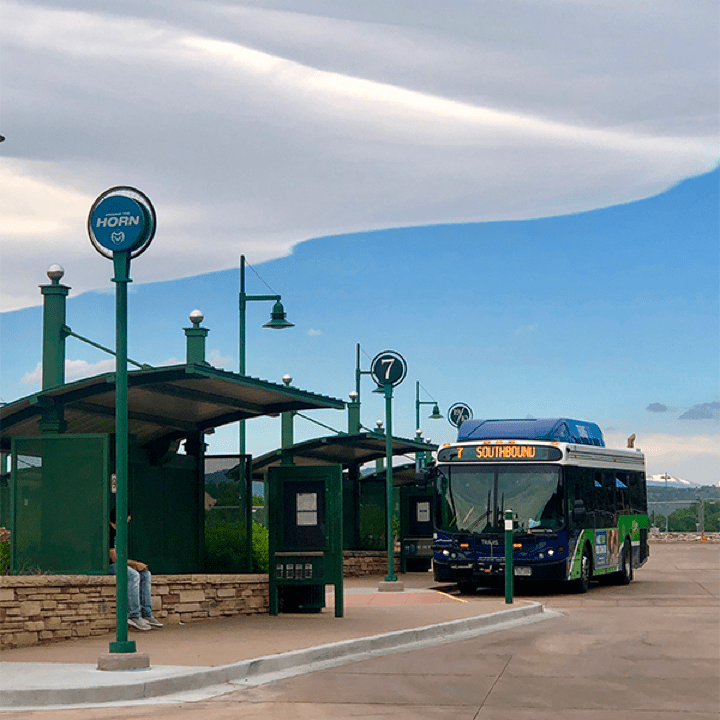
CSU Transit center in Fort Collins, Colorado. Photo By: Colorado State University , 2020
Another way to get around is by taking advantage of all the bike lanes. Fort Collins has a great biking infrastructure. With “…more than 200 miles of dedicated bike lanes and 50 miles of marked or signed bike routes,” Fort Collins clearly prioritizes people’s ability to ride their bikes around town.
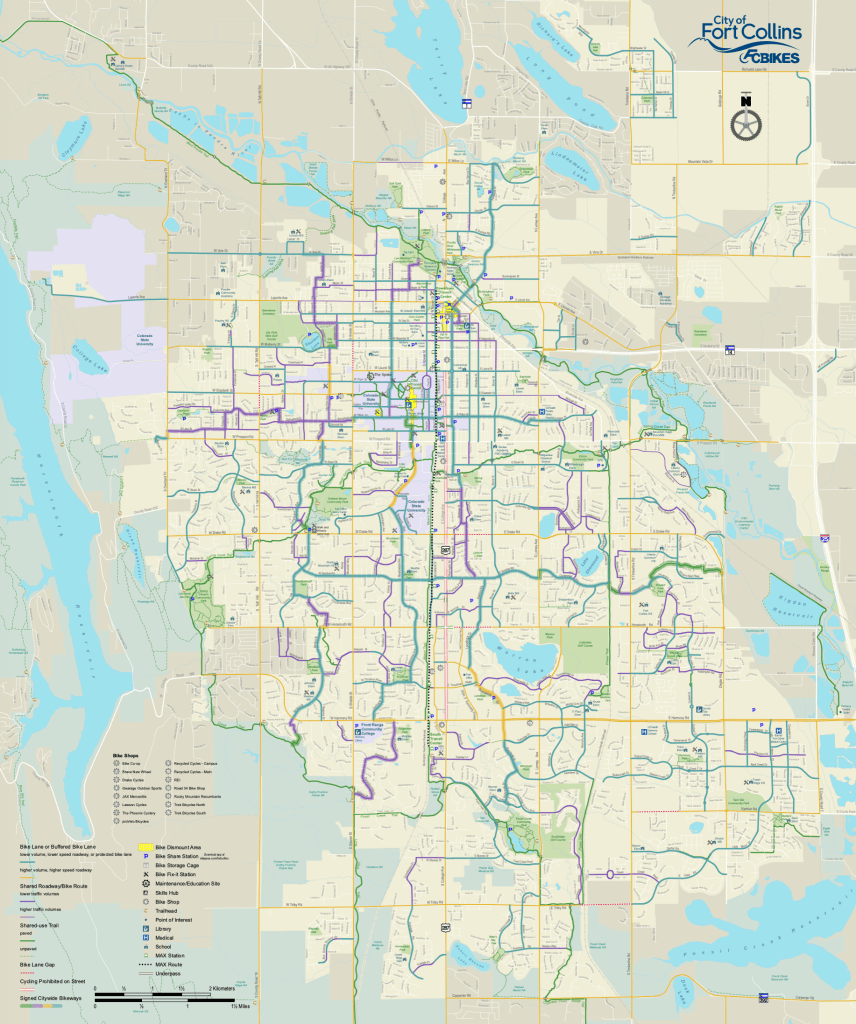
Map of bike lanes and bike paths in Fort Collins, Colorado. Photo by: City of Fort Collins, 2019
Fort Collins has proven to me that there is no need to deal with the stress that comes along with driving. It is much easier and more efficient to take advantage of public transportation and bike lanes.
-
Subscribe
Subscribed
Already have a WordPress.com account? Log in now.
 NoCo Convos