-
The Importance of Sidewalks
By: Catherine Williams
Fort Collins, Colo.- How can sidewalks benefit the everyday citizen? Sidewalks provide protection for all citizens as they walk from place to place. The benefits of sidewalks can be seen through their tremendous impact on the number of injuries and deaths due to pedestrian and automobile-related accidents, but also the decreased risk of numerous health problems.
In this article on pedestrian safety, the FHWA noted that “sidewalks can help to prevent up to 88 percent of crashes involving pedestrians walking along (not crossing) roadways”. Their research showed that sidewalks not only reduce crashes involving walking along a road, but also sideswipes, head-on collisions, and fixed object crashes. Good sidewalks not only protect citizens from the dangers of cars, but well paved sidewalks will also prevent common everyday injuries like trips and falls.
Downtown Sidewalks in Fort Collins, CO. Photo by: Peggy Lyle
In UMD’s article on the impacts of sidewalks on citizens’ health, their study showed that features like sidewalks that improve the walkability of an area, reduce the risk of mental health problems like depression. This study also showed reduced risks of physical health problems like obesity and high blood pressure. The more walkable an area, specifically neighborhood areas, the less likely residents are to have these health problems.
How does Fort Collins, Colorado, fall on this issue of sidewalk infrastructure? Though Fort Collins already has fairly good sidewalks, they see where they are struggling and focus on problem areas to improve. Their sidewalk improvement project highlights poor and missing sidewalks across the city that need to be repaired. According to the Coloradoan, Fort Collins’ “sidewalk program receives about $350,000 a year through the Keep Fort Collins Great and Building on Basics, or BOB, sales tax programs”. The City of Fort Collins revealed they have consistently met or exceeded their goal of sidewalk construction and repairs almost every quarter, from 2017 to 2022. The more improvement seen in sidewalks with the continuation of the project, the more improvement we can expect to see in Fort Collins as a whole, due to the benefits good sidewalks have on citizens.
-
Benefits of Public Transportation on Mental Health
By: Casey Walters
Fort Collins, Colo.-One issue that affects the happiness of urban places is the social interaction that is gained from using public transportation. Commuting by car on a day to day basis is extremely isolating, which can have detrimental effects on a person’s mental health. The Guardian states that a survey of 18,000 passengers found that people who traveled to work using public transportation were happier than those who drove.
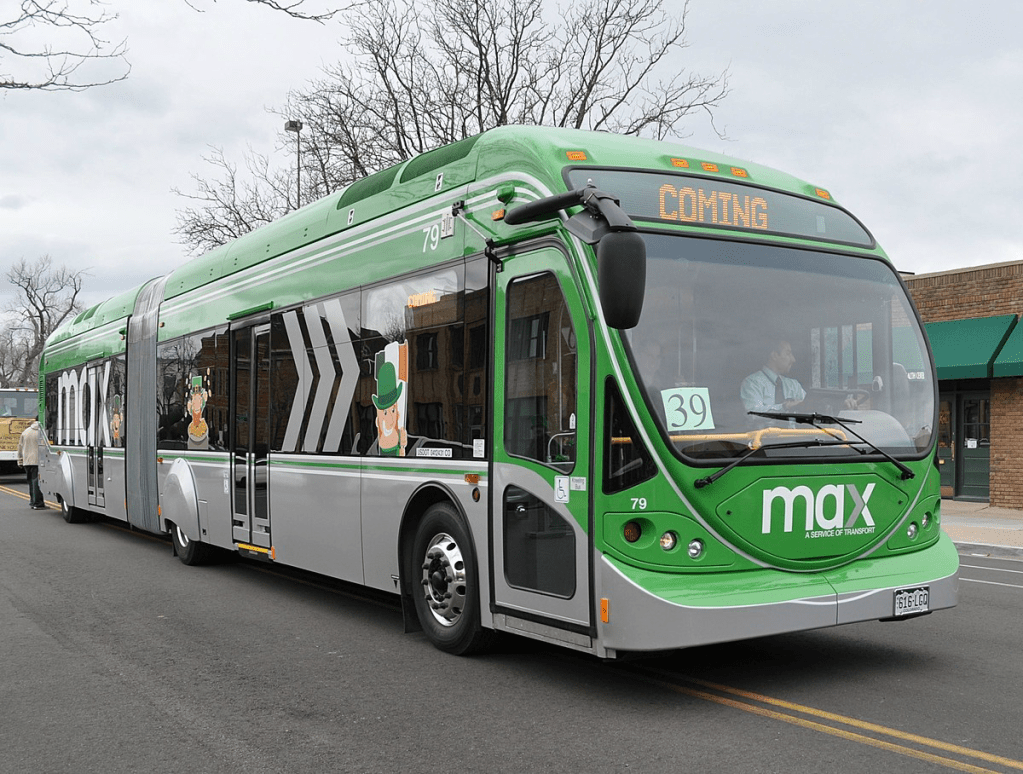
In Fort Collins, MAX buses are free and have 12 stops in the area, including stops on CSU campus and many within old town. Passengers can also bring their bikes onto these buses and to get from the bus stop to their final destination.
According to CBS, Fort Collins recently received 10.7 million dollars from the Department of Transportation to expand public transportation lines. Fort Collins first started this motion toward having public transportation available to its citizens starting in 1907, with the trolley. This trolley had three lines spanning 6.2 miles.
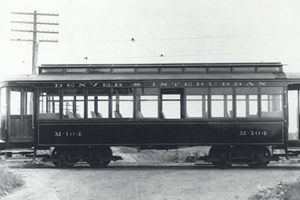
Historical photo of Fort Collins, CO trolley. Photo by: Fort Collins History Connection
Public transportation provides numerous benefits to its passengers, including:
- Provides diverse interactions across socioeconomic statuses
- Interactions across age groups, elderly people who are unable to drive themselves can still leave the house
- Sense of independence for those who may not have access to cars
- Encourages people to visit a city’s outdoor spaces by making them more accessible
In my experience, San Francisco is a special place because it has plentiful outdoor spaces. A short walk can keep a person from visiting these spaces because the topography of the city is so difficult to navigate, you are unlikely to visit a park if it requires a treacherous walk up many flights of stairs. San Francisco is also lacking in its access to public transportation, so people can’t use it to get to these locations.
I’ve found that the lack of public transportation and time spent in public locations in the Bay Area contributes to a sense of isolation within the community, whereas the culture of Fort Collins is more open and welcoming, and I believe this may have to do with engagement in public transportation and services.
-
Replacing Four Wheels with Two
By: Annika Johnson
Fort Collins, Colo.- Forty-six. An obscure number to anyone else, 46 defines my summer job as the number of miles I commuted each day by car. This stressful commute was one reason I disliked the job. Every morning started out by battling traffic on C-470 and I-25. In Fort Collins, my commutes to both school and work can be done by bike or foot, making them more enjoyable.
The ability to rely on a bike for transport is one way Fort Collins succeeds in encouraging happiness. A 15 minute city is one key to increasing happiness. Residents in a 15 minute city are able to bike or walk to essential places in 15 minutes, making cars unnecessary. Fort Collins’ commuter challenge encourages employees to bike to work through prize incentives and friendly competition.
Drivers in Fort Collins are used to bikers, with nearly seven percent of the population commuting by bike, whereas in my hometown, few people dare to bike down the chaotic streets. Here at CSU I enjoy my commutes to school or work because I have control over my surroundings, and leaving at the same time yields consistent results.
Fort Collins offers resources such as a Bikeway Bingo, maps and educators to expand knowledge on the bike system. Biking releases dopamine in the brain, but so does completion of a task or a goal. By setting out goals for the population to achieve, Fort Collins is continuing to encourage people to ditch the car.
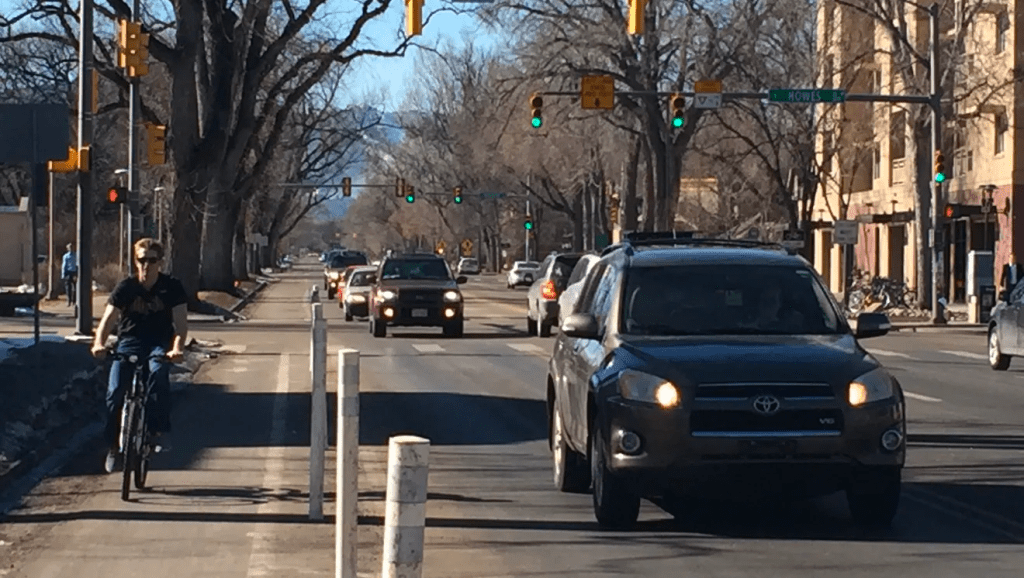
Protected Green Bike Lane on Laurel in Fort Collins. Photo By: Miles Bblumhardt
As Fort Collins increases the number of “green bike lanes”, bike lanes with protective barriers, they are committing to continuing to have a large percentage of people who bike. With the cost of gas rising and a car becoming more for the elite, it is imperative that we ensure safe transportation opportunities for all.
Bike lanes in Fort Collins allow residents to utilize alternative transportation. By continuing to ensure bikers’ safety, we can become the epitome of a happy city. 46 mile commutes will become ones done by bike or foot while cities become less car centered.
-
More than Just a Tree
By: Charlie Beelaert
Fort Collins Colo. – Since I was a kid, I have always utilized my city’s public parks and open space to enjoy nature or recreate. These amenities are crucial, as they increase people’s happiness and allow them a space to escape the hustling urban setting. As demonstrated in the city of Fort Collins, improvements to these Urban Greenspaces (UGS) are crucial to making cities a more happy and equitable space for everyone, no matter someone’s background, ethnicity, or socioeconomic situation.
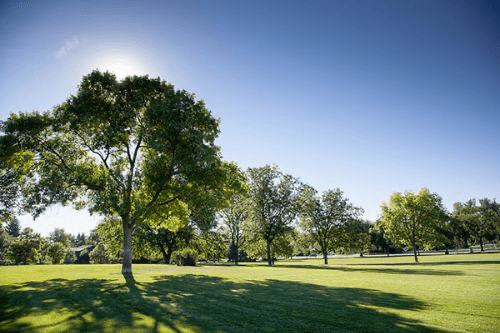
Many people who live in an urban setting have to be able to afford it, but as Charles Montgomery highlights in Happy City, “Self-reported happiness correlates with a lot of things that money cannot buy” (Montgomery 35). A public greenspace can be enjoyed by anyone, no matter their socio-economic circumstance or financial background.
In a study released by The City of Fort Collins’ Diversity, Equity, and Inclusion Office (in the shadow of George Floyd’s murder in 2021), 114 aspects of life were surveyed among the city’s population, finding inequitable results in almost all of them. A major finding was how “disparities were also found by income and neighborhood for sidewalk conditions and parks and recreation, respectively” (Fort Collins Equity Indicators 117). Since releasing these findings, the city’s office implemented concrete steps to promote more equitable access to community parks and UGS.
As highlighted in the city’s subsequent “Final Equity Plan”, the city is working towards an “approach to accessibility that examines current practices and aims at increasing and refining aspects such as language in contracts…parks and recreation amenities…” (Equity and Inclusion Plan 14). By posing this challenge, Fort Collins has acknowledged that there is a need to improve UGS, and that these environments are key to the happiness of residents.
Ultimately, studies implemented by cities are important because they highlight these disparities/inequities, finding systematic challenges that require addressing. At the end of the day, change starts with one person, and that could create a ripple effect that can affect millions. Now, the greenspace in Fort Collins is enjoyed by all, getting so close to being a model for future development and equitable living.
-
Transportation transformation: The city of Fort Collins MAX bus system
By: Sam Adhikari
Fort Collins, Colo. -“Give it 10 minutes.” My head jerks to the man next to me at the bus station. “They come every 10 minutes, you can sit till then.” He had most likely sensed my panic as my 9:00 a.m. class starts in less than 15 minutes. “You should have seen what it was like back then, before all this. I have been here since 1953.”
Fort Collins, Colorado, a city known today for its vibrant culture and breathtaking natural areas. Accredited for the vast opportunities for recreational activities, a strong sense of community, as well as being home to Colorado State University (CSU), Fort Collins (FoCo) is praised for its high standards of living. Upon this recognition, the city is internationally known for its commitment to moving towards a sustainable and environmentally friendly community. Apart from contributing to the vibrant and diverse community in the United States, this city continues to initiate renewable energy and people-friendly/bike-friendly pathways. This is similar to the book by Charles Montogemertry, Happy City, which is a city that is self-sustainable and focuses on creating areas for human interactions over privately owned businesses.
Through the city’s continuous push towards sustainable and environmentally friendly decisions, this is evident in many ways in the city. One of the ways is the current MAX transit system. It was the largest bus transit system in Colorado for a few years. FoCo’s decision had inspired other transit systems models and systems; such as the RTD transit system in Denver and the Bustang. It must also be noted that even with the difference in size between Denver and FoCo, the wait time for the bus on average is longer in Denver than in FoCo.
From DaTaUSA, FoCo was given on average commuting 20 minutes, regardless of what transportation method was used. Compared to the statistics back 20 years, FoCo’s focus on their resident’s access and flexible mobility, like myself, has helped the city rank among the top cities to live, not just in the United States, but in the world.
-
Green Buildings in Fort Collins
By: Summer Turner
Fort Collins, Colo. — Identified in both The Story of Stuff and Project Drawdown, a crucial part of practicing environmental justice, human health, and sustainability is to source materials in environmentally friendly ways and to encourage the building and distribution of eco-friendly houses and housing materials.The Fort Collins website states, “Green building is the design, construction, operation, and demolition of buildings in a way that reduces environmental impact, improves the health and well-being of occupants, and increases financial performance.”
Annie Leonard also discusses in The Story of Stuff just how many chemicals everyday housing materials use and the highly toxic materials needed to construct houses today. Recently within the U.S., there has been increasing demand for sustainable materials and the use of alternate materials such as hemp.
The Vegan Design website states this about hemp building materials: “It is environmentally friendly. It uses less energy, releases less carbon dioxide, and has lower levels of volatile organic compounds. Its production also avoids the use of toxic materials like formaldehyde and asbestos, which are often found in concrete.”
Using new and unconventional materials to construct eco-friendly and sustainable housing units has countless benefits. As mentioned above, Fort Collins has been trying to make the switch to supporting more green infrastructure. The Fort Collins website states, “The City has an array of services and programs that can help building owners, facility managers, tenants, and others build green and improve their buildings.”
Project Drawdown also does a very good job of explaining how and what net zero buildings are and how they can be built, along with the many benefits they come with. However, there is no mention of hemp substitutes as they have just recently been gaining popularity in the last few years.
There are socially constructed assumptions made about eco-friendly hemp building materials. The word hemp often makes most people’s minds drift to hemp’s more illegal cousin, marijuana. As these two plants have similar physical appearances, they are often confused to be the same thing, and all of the possible benefits of this amazing plant are frequently lost because of ignorance.
Another large problem that hemp faces is lack of distribution, as just recently, in 2018, it was removed from the FDA-restricted crop list. Ultimately, we need to push for the distribution of more sustainable alternatives such as hemp. As well as continuing to educate people as it is one of the most effective ways to go about changing the negative connotations placed on this versatile, sustainable building alternative.
-
The Food Bank for Larimer County and Sustainable Equitable Distribution
By Quinn Rodgers
Fort Collins, Colo. — The support of countless sustainable and equitable organizations, it may become difficult to see their impact. One of the greatest bastions of sustainable practice on a local level is the Food Bank for Larimer County, producing equitable food distribution that visibly nearly feeds the entire population of people that are food-insecure in Larimer County.
Food banks are a valuable aspect of the food supply chain, as rather than using an extensive path filled with differing extraction and processing methods, they receive products from donations. This method combats countless dangerous distribution factors, such as carbon emissions from countless production levels, and external costs such as lowering workers’ wages. Food banks are additionally crucial in increasing equitable conditions in local communities by fighting food insecurity, along with decreasing food loss and waste.
Food Bank for Larimer County is the main local food bank for Larimer County and Fort Collins. The food bank receives products from a plethora of sources including food drives, corporations, distribution companies, and individual donors. If one in the Fort Collins area is looking for a sustainable way to store food rather than throwing it out, Food Bank for Larimer County promises to keep items ranging from meat to dairy.
Avenues such as food share programs, offer cost-free grocery stores for the local community, create an equitable form of distribution, allocating food to more individuals rather than putting products on sale or sending them to the dump.
In Larimer County, 10.9% of residents are living in poverty, with 38,040 members of the community living with food insecurity. Donating to the bank makes a large impact in allowing the distribution of food which goes to serve 37,500 people, proving to be an equitable and effective method of food distribution.
Feeding America, the parent company of the Food Bank for Larimer County takes a sustainable stance regarding the food supply chain. Their programs mitigate miscommunication and waste in the food supply chain by offering locations near food transportation routes that incentivize drivers to deliver their goods for distribution instead of sending them to the landfill and releasing carbon emissions for wasted foods.
Anne Leonard, in the story of Stuff, mentions the lack of corporate accountability within the food supply chain. Just as companies externalize costs onto workers, citizens, and the environment, waste is a cheaper method of food disposal in the food supply chain, along with the most accessible choice for drivers that are denied grocery stores.
Since the Food Bank for Larimer County acquires food from drivers and companies, food may be distributed into the local community while also combatting the toxic supply chain. As a member of the Fort Collins community, using your resources aids neighbors that require costless groceries, along with contributing to a greener food supply chain.
-
Chapter 8: Multidimensional Travel (No Wormhole Required)
I’ve focused on the humanities throughout my entire project thus far, talking about how and why it’s important for our society and culture to progress forward. But this week, I took a look at the other side of academia.
I took a look into science, technology, engineering, and mathematics, also known as STEM.
I had the privilege of speaking to Dr. Erika Syzmanski, a professor who works in the English department at Colorado State with a background in microbiology.
She had a unique perspective that crossed between both worlds of STEM and the Humanities.
Syzmanksi is a multi-talented and highly intelligent academic who gave me insight as to why she chose a job that makes a third of the money she would be making if she was doing the same thing as a STEM professor.
Dr. Erika Syzmanski
As a 4-year-old, Syzmanski watched an episode of Sesame Street where a character goes to the doctor. This is when she discovered that she wanted to be a doctor herself.
She was just 12 years old when she fell in love with microbiology at a summer microbiology camp.
When looking at universities, she discovered programs that combined PhD and MD degree pathways that allowed for her to become a doctor and a microbiologist at the same time.
She purposely chose a smaller, liberal arts college as opposed to a large research school. She didn’t want to spend all of her time in a lab.
She had many interests when she was growing up that translated into her academic career. Even while studying for her undergraduate degree in microbiology, she took humanities classes for her own enjoyment.
“I took advanced undergrad writing as an elective and I was the only non-English major in the class,” Syzmanksi said. “I’ve always known that I’ve had a lot of diverse interests.”
She went through a PhD MD program and got her masters in microbiology, but realized something about herself halfway through medical school.
She was spending a lot of time up late at night writing.
“The most exciting thing about the work I was doing,” Syzmanski said, “was how we made sense of it and how we make knowledge through words. Though I love microbiology, the thing I love most is how we make scientific knowledge accessible, not actually making it myself.”
Once she made this realization, she walked across campus from her lab to the English department and asked if she could move. She was able to, and she got her second masters in rhetoric and composition.
STEM in Today’s Age
Syzmanksi’s many interests and curiosity kept her from a lab and brought her to the English department at Colorado State University.
There’s a line between STEM and the humanities, and Syzmanksi is able to jump rope with it.
“There’s something just joyful to me about recognizing that in this room there’s a whole set of different worlds going on, to which we have very little access to,” She said. “It’s like parallel universes without me having to go through a wormhole.”
The metaphorical multidimensional facets of travel that STEM academics explore fascinated Syzmanski, but with the binary expectations of STEM, she knew it wasn’t the right place for her.
“STEM gets pushed into really really narrow ideas of problem solving.” Syzmanksi said. “Folks aren’t just expected to solve problems, they’re expected to solve them fast. These infrastructures don’t give us time to think because everyone feels under pressure to succeed all the time.”
Syzmanksi went on to explain how she would make 3 times the amount of money she was making right now if she was doing the same thing in a STEM department in a building that’s just a five minute walk away.
She chose what truly spoke to her, and the thing was the Humanities.
Syzmanski’s Jump Rope
Syzmanski has always loved reading and literature, but she does not have the typical English Professor relationship to the humanities.
She told me that she is completely uninterested in reading Jane Eyre over and over again in hopes of maybe finding out something new about the character on the 15th read. She is more drawn to the power literature has when it comes to our own humanity.
“The humanities is absolutely essential to all of the problems we face, and not just for problem solving, but for being human, and oh my goodness do I want people to have that.” She said.
The humanities can be how we dig deeper into ourselves as humans in order to solve conflict and see the beauty in life, but there’s an innate problem with literature that’s existed for generations.
“The humanities has been grounded in an ideal of a human that is exclusionary.” Syzmanski said.
The humanities has not been about all of humanity, but rather a specific kind of human Sysmanksi pointed out.
There was a hierarchy established where white men were at the top, they were perfect. Then came women who were imperfect men, then animals who were imperfect women.
As a society, we have built what the “ideal” human looks like. Syzmanski is a part of a group of people who want to reshape what the human looks like at the center of the humanities, the human that has typically been a white man.
She spoke of an idea that argues that people become killable when they do not seem to know anything of value, whether it be a centric idea of language, culture, or physical appearance. If someone strays from the established idea of a human, they become less than one.
“It’s also built into this way that people’s languages are systematically erased from higher knowledge and aren’t even studied.” Syzmanski said. “It becomes really easy to discount this group from not knowing anything if you don’t even recognize what you don’t know about them…and that makes me sad.”
There’s power and identity in culture and language, and if you strip people from these things or refuse to acknowledge these elements of themselves, it becomes easier to dehumanize them.
So how has the separation of STEM and the humanities helped shape these divides of people?
“We’ve built up this hierarchy that suggests that scientists are somehow more and better equipped to solve problems than humanists.” She explained. “STEM takes more money than the humanities does. Their grants are bigger…Because it takes more money to do science research, it brings more money into the university, and at some level it looks more valuable.”
However, literature, writing, and reading are all components found within STEM. The two sides of education are not as divided as we think they are, and Dr. Erika Syzmanski is a prime example of this.
“Gravity exists, yes, but how do you explain gravity?” Syzmanksi said. “How do you make knowledge about gravity? What’s the right way, if there is such a way, to talk about gravity?”
Syzmanski balances the humanities and STEM aspects of her life. She is passionate about knowing and understanding the world around her, whether it’s the invisible molecules that sit on her desk, or the understanding of cultures that are different from her own, her pursuit of knowledge ceases to exist in one lane.
“We should find as many ways to know things as possible.” She finishes. “I think that we should continue to be creative and curious people because it’s the thing that enables us to form relationships with each other. I don’t think that knowing things is the point of humans, but we collectively add to the richness of the universe by continuing to be creative.”
-
Fast Fashion Comes with Slow, Long-Lasting Consequences
By: Emma Recker
Fort Collins, Colo. — H&M, the third most popular clothing retailer internationally, sells around 500 million items annually among its 1700 stores; however, these quantities do not consider unsold and discarded items.
Fashion seasons have drastically changed with time as there are now 26 seasons, indicating there is a new fashion season biweekly. This is problematic because fast fashion companies like H&M are committed to producing low-quality products utilizing unethical work conditions and cheap materials leading to a short-lasting, temporarily trending product.
The speed of production and constantly changing microtrends affect distribution because H&M is committed to having multiple low-costing suppliers producing their products. After all, cheap suppliers are easily replaceable, hence leaving the flow of products into stores undisturbed if something goes wrong.
H&M produces griege goods, so low quality clothing pieces are produced and move factories to be dyed and finalized. These goods must be rapidly transported and involve the heavy use of synthetic dyes, chemicals, and pesticides. H&M has a goal of maximizing their corporation’s profits, therefore they scout factories in underdeveloped countries to produce their products for the lowest wages possible.
Large corporations dominate the industry of fast fashion, unethical labor practices, and contribute the most detriment to the environment. Chemicals in textile wastewater are a commonly discussed phenomenon as cotton and various fibers go through bleaching and chemical processing.
However, it is rarely discussed how the remaining chemicals left on an article of clothing can be harmful to human skin. Benzothiazole is a toxic chemical used as a synthetic dye in clothes, it is hazardous when in contact with human skin. It can also be found in water sources due to manufacturing processes and improper disposal of products and wastewater.
Textiles are processed using pesticides and synthetic chemicals in copious quantities, which results in soil and water quality degradation. Fast fashion contributes to an increase in carbon emissions as quick transportation between factories and retail outlets leads to large emissions of greenhouse gases.
Thrift shopping is a growing alternative to purchasing cheap fast fashion as items are second-hand, personal, environmentally beneficial, and typically low-priced. Fort Collins is a mid-sized college town known for its unprecedented charisma and socioenvironmental efforts for its sustainability, so it makes a good hub for thrift stores.
Fort Collins has a quirky feel, and everybody embodies an unmatched, personalized style, so thrifting appeals to locals as stores offer one-of-a-kind statement pieces, hidden vintage items, and cheap basic pieces. Arc Thrift Stores is essential when thrifting in Northern Colorado as it offers a ginormous inventory offering clothing sorted by size and article, home décor, appliances, and toys.
Brand Spanking Used Thrift Store is known for lining its shelves with outlandish and quirky statement pieces, in addition to casual basics. It is a two-story thrift store, so there is furniture and home décor hidden beneath the top level.
Eco-Thrift, a thrift store offering gently used items and lifestyle essentials, and Funktional, an upscale boutique, are sister secondhand stores in Fort Collins. Eco-Thrift is collaborative within the community as they partner with local businesses and nonprofits to boost sustainability efforts. In addition to accepting clothes,
Eco-Thrift gathers used electronics, metals, and mattresses, so they can be properly reused and recycled. Eco-Thrift has an Eco Tool Lending Library, which allows people to rent kitchen implements, gardening tools, automotive tools, and hand tools for a low cost. Citizens of Fort Collins are allowed to rent home tools through a membership that costs $9 per month.
This is an innovative measure towards sustainability as most humans will not use a home tool more than a few times, so when these tools are thrown out, lots of close to new metal is being wasted. Reusing and recycling items is beneficial both for one’s pocketbook and for the environment.
-
Fort Collins celebrating local farmers
By: Piper Levendofsky
Fort Collins, Colo. — Within the last few decades, it has become evident that the U.S. loves its ‘stuff.” We fight people for the best deals on Black Friday, order items online that come from thousands of miles away and can never seem to get enough of them.
This mindset of so many Americans has undoubtedly contributed to the greenhouse emissions released when this ‘stuff’ is being distributed from various continents around the world, considering 27% of all greenhouse gas emissions come from transportation, According to EPA. However, Fort Collins has made strides in the community to reduce their impact by utilizing locally made goods in their restaurants and other businesses.
One of them is the farm-to-table concept, where an establishment’s food consists of fresh locally grown products. This idea has been taken advantage of by restaurants and nonprofits in Fort Collins to become more sustainable while also supporting the community.
A great representation of these efforts was carried out in 2018-2019 as a “Fortified Farm Dinner”. For this event, a series of outdoor dinners were set up that consisted of local breweries, restaurants, farmers, and nonprofits to celebrate the community and bring people together.
These dinners allowed the community to learn more about local food and how it benefits the community and the environment while also enjoying a fresh meal. Kristina Cash, the organizer of this event, notes that “we exist to expand and enhance community connections”.
This event was wonderfully carried out and is a great example of a community celebrating their local businesses while also eliminating greenhouse gas emissions released from the transportation of non-local foods.
Another way Fort Collins is utilizing local farmers is through nonprofits like FoCo Cafe, a volunteer-based restaurant that has a seasonal menu made from locally sourced ingredients. Seasonal foods are more sustainable because they can be grown in the same area they are eaten.
When foods are imported from other countries that have certain foods in season, it requires much more energy to transport them to other countries that need them. Without the demand for food being imported from different countries, greenhouse gas emissions relating to food transportation are vastly reduced.
In terms of food sustainability, Fort Collins is certainly ahead of the game with their food production and distribution. Eliminating the transportation costs and emissions released from importing goods–even on a local level– can make a great impact on the environment by embracing native foods and the people who produce them.
Next time you are looking for somewhere to eat, you may consider how far it has traveled to get to your plate and explore more local options. Small changes like these add up to make big differences in the world.

-
Subscribe
Subscribed
Already have a WordPress.com account? Log in now.
 NoCo Convos