-
The Electrifying Truth of Society’s Machine
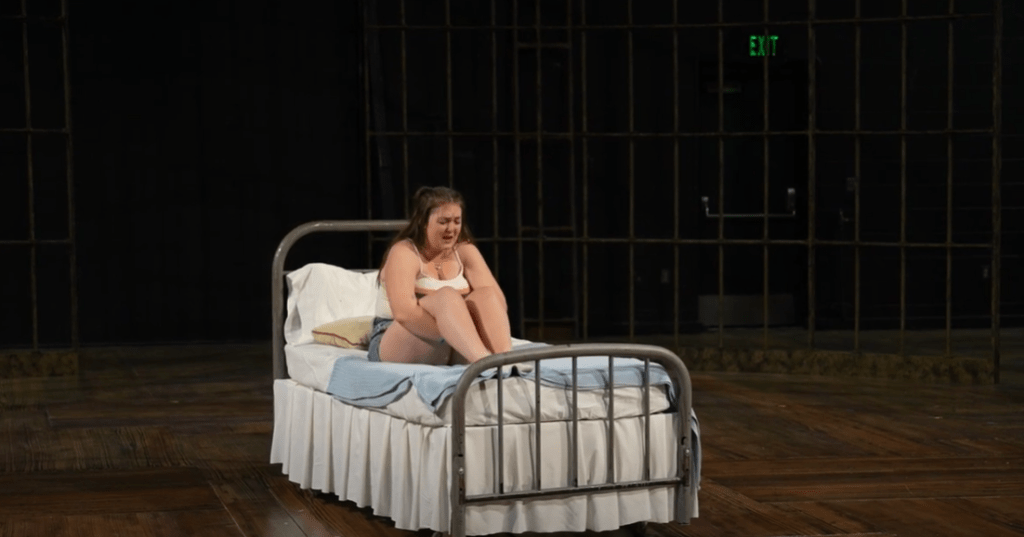
Sending a shockwave through audiences, Colorado State University’s production of Sophie Treadwell’s, “Machinal,” revealed the lengths that one woman will take when she is forced to conform to society’s machine.
Set in the American 1920s, “Machinal” is based on the true story of Ruth Snyder, the first woman in New York to be taken to the electric chair after murdering her husband.
While Snyder’s fate intrigued the Theater Department’s creative team, they were primarily focused on highlighting what drove Snyder to commit the crime in the first place.
“When understanding ‘Machinal’ what’s really important is that we are not advocating for what our heroine does,” said the show’s director, Debbie Swann. “What we’re trying to do is understand why a woman in a progressive time, both then and now, feels like she can’t be heard.”
Conversation and Interview with Debbie Swann, the Director of CSU’s production of “Machinal.” Even though this progressive period provided women with a world of opportunities, it simultaneously forced them to conform to an unwritten standard – be happy, work, get married, have kids. Simply put, just submit.
As a result, CSU’s production of “Machinal” possessed a feminist outlook that allowed audience members to understand what it is like to feel trapped by the machine that is society.
“The feminist message is definitely there, but I think it resonates with audiences beyond feminism,” said Swann. “This message is about [the audience] feeling that [they] are in a world that [they] can’t understand.”
The ability for the audience to feel the world of the play is enhanced by how “Machinal” is written in an expressionistic style, an art form that showcases emotional experiences.
By harnessing the play’s expressionism, the creative team designed “Machinal” to specifically reflect the emotions and sensations that the heroine, Young Woman, experiences as the play unfolds.
“If ticking of clocks and typewriters are overwhelming to her, we’re going to amplify it and fill the space to make a soundscape that will mimic how she sees the world,” said Swann.
While the audio, light and sound departments achieved this objective through their technological designs, Swann accomplished this through how she directed the cast.
To do this, Swann instructed cast members to turn, look or deliver lines away from Young Woman.
For Courtney LaFontano, the actor playing Young Woman, this staging further revealed her character’s emotional and mental struggles.
“I think that it adds a layer of intensity to the show just because it shows the audience what my character is feeling in the sense that she’s never seen or never heard,” said LaFontano.
With this in mind, one of LaFontano’s primary goals was to let the audience discover not only how Young Woman was driven to commit the crime that she did, but why she went insane.
“I’m worried that people are going to sit in the audience and be like ‘oh, so she’s just crazy, she’s just a murderer, she’s just wack,’ I don’t want that,” said LaFontano. “I want people to sit there and be like ‘wow, women are human beings.’ Everyone has their limit.”
Indeed “Machinal” showcases a woman who goes to the extremes and murders her husband. But the heart of the play urges audiences to realize the danger that people face when they are continually pushed to the limit.
“There’s no greater honor, in my opinion, than to play someone who’s so emotionally complex but also stands for such power and has such a symbolism,” said LaFontano. “I’ve put so much of my own emotion, my own franticness into her and I’m not really ready to let her go yet.”
-
Fort Collins is Ahead in Sustainable Fashion
By: Piper Levendofsky
Fort Collins, Colo. — When Macklemore released the viral hip-hop song “Thrift Shop” over a decade ago, thrift stores and other second-hand stores have been increasing in popularity.
Not only are they an affordable way to buy clothes, kitchenware, furniture, or anything else you could possibly think of, they take much less of a toll on the planet.
Buying second-hand keeps items out of landfills for longer, conserves water, lowers your carbon footprint, and prevents harmful chemicals from polluting the environment.
Whether you’re an avid antique collector or just looking for a new statement piece, Fort Collins has an abundance of thrift stores for everyone to find something unique.
You can find one on just about every corner of the city, and they’re always stocked full of goodies. One popular and extremely versatile thrift store is Eco-Thrift, a multi-functional storefront that allows you to rent tools, buy cheap clothes, or shop for home decor.
The aspect of borrowing items from their store is a unique quality that needs to be seen more because it encourages a strong community lifestyle, which lessens our toll on the planet.
Their sister store, Funktional, is a more boutique-style thrift store run by Eco-Thrift for those who want to find more unique and eccentric pieces. Eco-Thrift’s goal is “to leave our community a little greener than we found it” and they are certainly making an impact on the city of Fort Collins.
The overconsumption of ‘stuff’ is a serious issue, and is described as having detrimental consequences on the individual consumer, society, and the environment by many.
Producing brand-new items uses up water, fossil fuels, and other resources, and buying pre-loved items is a crucial aspect in helping solve this issue.
Next time you’re out in Old Town, be sure to pop in one of the many consignment and thrift shops. They’re full of treasures and constantly restock their items so you’re guaranteed to find exactly what you’re looking for.
-
CSU and Consumerism
By: Macy Kramer
Fort Collins, Colo. — In Fort Collins, CO resides Colorado State University, one of the most sustainable and environmentally friendly colleges in America.
CSU focuses on environmental sustainability, they have programs for food waste prevention and have solar panels to power most on-campus buildings. They have recycling initiatives and donation events.
CSU does all of this not just to better the environment, but to diminish the amount of over-consumerism occurring on campus and in the city of Fort Collins.
The importance of over-consumerism is explained extensively in “The Story of Stuff” by Annie Leonard, where she goes through the difference between consumption vs overconsumption, and the personal vs global effects.
Another great read is “Consumerism” by Anne Meleny. The article investigates how consumerism is a part of every person’s daily life and how it affects things like social class.
CSU has done many things to decrease its consumerism and bring awareness to the effects it has on the environment and its students. One initiative written about in, The Collegian, a CSU newspaper, is a group of CSU professors who hosted a panel in Sept. 2022.
The event was called, “Managing the Planet: Over Consumption What Can We Do?” and collected some professors and students to talk about what is happening and what we can do to help. The panel-style discussion allowed onlookers to propose ideas and questions, and share their methods of reducing their environmental footprint and contribution to overconsumption.
One more notable example was how the clothing brand Patagonia allows its customers to send the clothing back to them to be repaired instead of the clothing being thrown away and put to waste.
There are plenty of ways for people to reduce their effect on the environment by cutting their overconsumption and helping the planet. CSU is a fantastic provider of better ways to live and has less of a footprint.
-
The Demise of the Land Use Bill
Housing in Colorado has become a hot button issue. With limited housing leading to high costs and a dramatic increase in property taxes, Governor Polis and the Colorado legislature attempted to do something about it this past legislative session, which ended Monday night.
A whole slew of housing bills were introduced this session but the most consequential was the Land Use Bill, introduced by Senate Majority Leader Moreno and Reps. Jodeh and Woodrow, all democrats. The bill was heavily supported by Governor Polis.
The bill, as introduced, would have eliminated housing occupancies, allowed for ADU’s to be built anywhere, would have allowed for manufactured homes to be treated the same as regular homes and would have directed local governments how development should take place.
The sweeping Land Use Bill also promised to at first get rid of U+2 and similar occupancy limits throughout the state. This was eventually changed to allow cities with a quarter of their population being college students to limit occupancy to five unrelated per house.
The bill went through a lengthy legislative process and took many different forms throughout its journey in the state legislature. Ultimately, not enough stakeholdering was done when the bill was written and there was too much to fix in a short amount of time.
Stakeholdering is the process that legislators go through to include affected parties, known as stakeholders, to get a better understanding of how they should write the legislation.
Local governments worked hard to lobby the bill to get what they saw as important changes into the bill. Many of these amendments made their way into the bill in the Senate and made many folks more comfortable with the bill.
However, when the Senate sent the bill over to the House, the House added many of the upzoning and density requirements back in.
This likely led to the downfall of the bill. Many of the very things that the House added back into the bill were the things that critics were most worried about.
Another contributing factor to the demise of the Land Use Bill, a key policy proposal of Governor Polis, was time. Since the House made amendments to the bill the Senate passed, the Senate had to consider those amendments. The Senate was given only a few days to do so and simply ran out of time to even vote on it.
The bill, which was over 100 pages long, was introduced about halfway through the legislative session. Maybe this was because the sponsors of the bill did not expect such heavy backlash but Nonetheless, there just was not enough time to get the bill done.
Though the Land Use Bill died this legislative session, it is likely that something similar will be back next year. Housing will remain an issue in Colorado, especially since the state’s signature housing policy never came to fruition.
U+2 has been a topic of concern for quite a while in Fort Collins and the change to occupancy limits would have been significant for college students.
U+2 highlights the complexity of the public policy process. It is difficult to create a policy that will leave everyone somewhat satisfied. CSU students want it gone but many of the established residents in Fort Collins want it to stay to protect the integrity of neighborhoods.
While a removal of U+2 has been a focus of ASCSU this school year and past, there have also been conversations from City Council about making adjustments to the ordinance or allowing voters to decide via a ballot initiative.
Some adjustments would be extending the limit to something like U+3 or changing the zoning requirements for where U+2 can and cannot be enforced. Fort Collins is not alone in its housing occupancy restrictions.
The City of Boulder also has a housing occupancy rule but it is more comprehensive than Fort Collins but even Boulder is looking at how they can update their occupancy limits, according to Karl Guiler, a senior policy advisor at the city of Boulder.
“We’re actually in the process of looking at changing it,”Guiler said “We have requests to change it to four unrelated occupants.”
Currently, Boulder’s occupancy limit is set at three unrelated, similar to Fort Collins U+2. If the Land Use Bill wasn’t able to spark change in occupancy rules, perhaps Boulder changing their occupancy limit will.
Policymakers will have the chance to take the Land Use Bill around the state this summer to further stakeholder it.
The demise of the Land Use Bill was a surprise to many. It was backed by the Governor, who has significant sway with the legislature. This was Polis’s first big legislative defeat at the state Capitol.
The bill was eerily similar to the Land Development Code that the City of Fort Collins proposed last year. Much to the demise of Colorado State students, they will now have to wait for the City to make changes to U+2.
Fort Collins started their Land Use Code updates a few weeks ago and at the time they started, it appeared that the Land Use Bill had a better chance to pass and their Land Use Code updates may not matter.
However, now that the Land Use Bill has died, Fort Collins is on its own to update the Land Use Code and find a better way forward. Fort Collins, which appears to have learned from their alleged mistakes last time, is hitting community engagement hard.
The City sent out over 97,000 postcards informing residents of Land Use Code updates. According to the Land Use Code website, the City is transitioning from community engagement to community analysis.
The last few events in the community engagement portion of the update are walking tours where residents can walk around neighborhoods with city employees to get an idea of how neighborhoods could change under the proposed code.
As always, feel free to reach me at michael.stella@colostate.edu or @Michaelstella_.
-
A Conversation with David Katz
David Katz is a senior broker with Waypoint Real Estate, a commercial real estate company in Fort Collins. He is also the head of the Fort Collins Planning and Zoning Commission.
“Waypoint Real Estate is a full service commercial real estate firm specializing in brokerage, management, and investments.” Katz said.
Katz’s voice in the Fort Collins real estate industry is unique because he has the perspective of an experienced real estate broker as well as the Planning and Zoning Commission chair.
The Planning and Zoning Commission makes recommendations to the city council regarding zoning, annexations and major public and private projects. Katz was appointed as chair of the P&Z commission in 2019.
“We are not the decision maker, we are an advisory committee,” Katz said.
While Waypoint did not have a view on the Land Development Code, Katz did have some personal views on the Land Development Code, stemming from his real estate career in Fort Collins and time on the Planning and Zoning commission.
Katz thought that there were parts of the Land Development Code that would have been beneficial to Fort Collins, though he did have apprehension about parts of the Land Development Code.
As part of his role as Planning and Zoning Commission chair, he felt that he had to recommend the Land Development Code to City Council.
“I try to see the forest through the trees,” Katz said. “I believe there were some positive changes being proposed so I did recommend it, with conditions,”
Katz went on to explain that he thought there were some parts of the Land Development Code that would increase the housing supply in Fort Collins but there were also some parts of the code that he did not support, however.
“Its probably the first time, and I haven’t admitted this to a lot of people but a few, but it was probably the first time in my P&Z career that I’ve had a little bit of regret.” Katz said. “I didn’t have any issue with it being repealed.”
The regret came from some of the changes that could have occurred from changes suggested in the Land Development Code, specifically changes that would have occurred in single family neighborhoods.
“You’re never going to make everyone happy,” Katz said of the city trying to rewrite the Land Use Code. It is fundamentally hard to write policy that will leave all parties satisfied but the city seems intent on trying to do so.
The city’s first conversation around rewriting the Land Use Code took place on April 26, with the Center for Public Deliberation hosting a deliberative forum to engage citizens with city council members.
Professionals like Katz have a deeper understanding of real estate and housing than the typical citizen and that gave Katz a better understanding of the Land Development Code than the average citizen would have. A common argument for the Land Development Code and the similar Land Use Bill, which died as the clock ran out on the legislative calendar, is that housing is a supply and demand issue.
“The demand is always going to be very strong here,” Katz said. “Will the increased supply offset the cost, I don’t know, time will tell. It won’t hurt.”
Katz went on to explain that in a highly desirable place to live like Fort Collins, it makes sense that housing prices would be higher.
The Land Use Bill has taken many different forms through its journey in the legislature. When it was first introduced, the bill would have drastically changed land use codes throughout the state.
The bill died in the final hours of the legislative session and now the focus has shifted back to the Fort Collins Land Use Code.
“Housing is an issue and nobody can deny that and what we’ve been doing hasn’t worked so we certainly need to make a change,” Katz said. “Something needs to change.”
The city has created an entire website dedicated to the Land Use Code update project. According to the website, the city is transitioning from community engagement to community analysis.
Based on the community backlash, though it was from a very select group of citizens, this could be interesting for the City. Nonetheless, the city appears to have learned from the last Land Development Code catastrophe and is really emphasizing community engagement.
As always, feel free to reach me at michael.stella@colostate.edu or @Michaelstella_.
-
How to Make the Right Consumer Choices in Fort Collins
By: Elise Kelley
Fort Collins, Colo. — While exploring the downtown area of Fort Collins, Colorado, one might notice the plethora of brightly colored decorations, well-designed landscaping, and bustling sidewalks. The variety of businesses ranging from shopping, business, entertainment, and restaurants, are all designed to appeal to the Fort Collins city-goers.
An amazing consumer aspect of Fort Collins is the availability of sustainable businesses that practice environmentally friendly methods of business, which have a lower environmental impact.
The business of Eco-Thrift offers appliances, clothing, gardening equipment, sporting goods, and furniture all of which are donated from the community and provided to give back to the community. By shopping at businesses like Eco-Thrift, consumers are not succumbing to the addiction of over-consumption but rather focusing on quality products that have less of an environmental impact.
A large issue with the consumer culture of America is that corporations adopt initiatives to entice the consumer to buy products, constantly changing what’s “popular” to increase consumption. However, it is proven that overconsumption makes an individual less happy. Once an individual’s basic needs are met, the more they consume, the more their happiness decreases.
The paradox is that purchasing products provides the consumer with dopamine, however, this dopamine soon wears off as the product does not have its “newness.” Annie Leonard’s “The Story of Stuff” details the results of the consumer as they constantly chase the dopamine rush, yet the more they consume, the less happy they inevitably become.
It is very distinguished that overconsumption diminishes one’s well-being. A way to combat falling into this cycle is for consumers to prioritize quality products and purchase only when necessary or on a special occasion.
The Fort Collins example of Eco-Thrift provides an excellent example of many sustainable shopping options located in Fort Collins. This store does not promote corrupt corporations, benefits the environment, targets quality products, and prevents the consumer from becoming indulged in the toxic cycle of overconsumption.
Corporations target consumers through advertisements that make the consumer feel bad or feel like they are lacking the advertised product. Thus, the consumer concludes that their life will be more fulfilled once said product is purchased. However, this is just a ruse for the corporation to increase profits and personally benefit the consumer.
The consumer, however, benefits from occasional and meaningful purchases. A way to apply this is through ethical consumption. Ethical consumption can be enacted by the consumer to promote more environmentally and socially conscious, by allowing the consumer to be more aware of their impacts, and feeling more in control. Through making individual changes, and taking steps to reduce personal consumption, individuals can fulfill their lives without obsessive consumption.
-
Student-Athletes and Their Mental Health Crisis
By Ray Mundine
Student-athletes have always been under the spotlight due to mental and emotional health concerns. It is overwhelming to the point where performance in a sport can consume an athlete’s entire identity. Practice, weight lift, film, practice, physical therapy, team meeting, media session, game time. There is no time for school and much less, time for themselves. Many students become overwhelmed with the sheer pressure of academics. Student-athletes tie on an average of four to five hours a day of sport-related activities according to Colorado State’s Athletic Director Joe Parker. Some even work a job after all the academics and athletics are done. It is easy to see why many athletes are struggling with a mental health crisis.
Raegan Gilchrist is a sophomore at CSU and a member of the cheer team. She has been cheering for six years Unfortunately, she has recently dealt with some severe injuries that put a pause on her athletic career. “We do something called a stand where someone is on my shoulders, and we stack other people on top. I had moments where I was bringing someone off my shoulders, my right shoulder would slip out and back into place. It wasn’t till October when I fell down the stairs, my shoulder fell out of its socket.” Raegan is currently still recovering from her injury and is unable to participate in tryouts for this year’s team. Oftentimes, athletes’ identities can become enveloped by their sport. “Sadly, I don’t feel like I know who I am without cheerleading. It has consumed so much of my time that I worry I won’t have much to offer without it.” This crisis of identity is all too common among collegiate athletes. From a young age, an athlete’s sport becomes part of their routine and one day, 10 years later, their athletic career just ends. However, there are some positive aspects of being a student-athlete, Gilchrist outlines some “I have become a hard-working athlete and student. I’ve learned to be more positive in my thinking and social life. I am more resilient than ever, and I have found strength within myself that I didn’t know I had.”
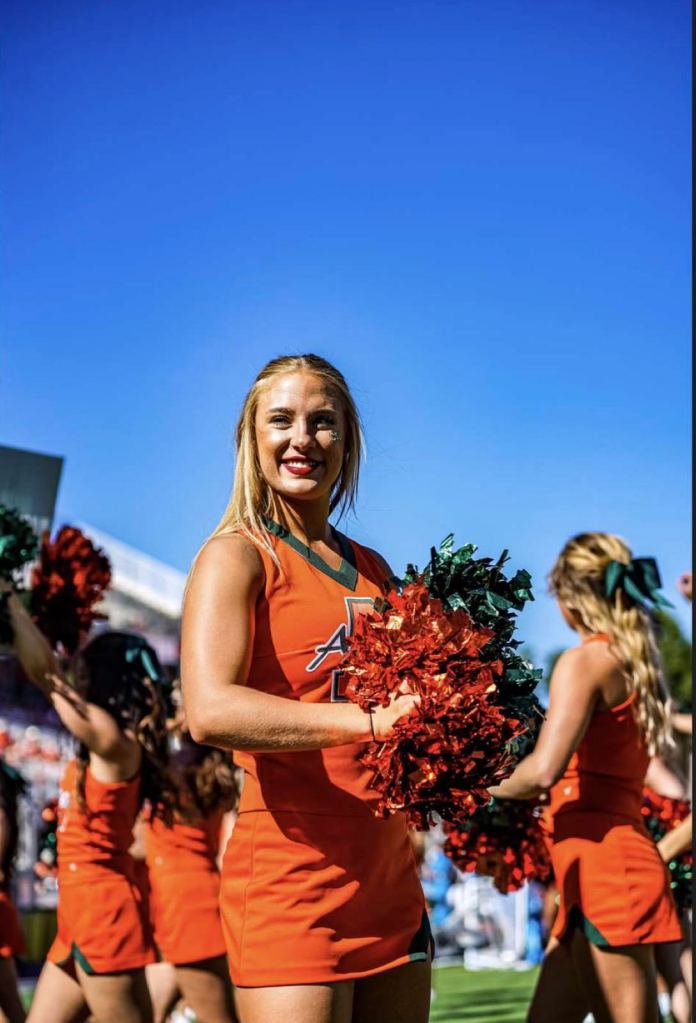
Raegan Gilchrist on Game Day at Canvas Stadium Athletes at CSU have very few outlets to aid them with any mental or emotional health issues they may be having. The Hidden Opponent is an organization at CSU that specializes in any mental health problems that athletes may have. However, this is the only point of contact that specializes in athletes’ well-being.
Athletes struggle all over the world, it is an unseen pandemic. The top three universities in Colorado host a total of 1,244 division one athletes and have over 75,000 students enrolled as of 2022. It is easy to see why these athletes feel sequestered. This is evident at every tier of the athletic structure, including one’s own team. Jillian Schneggenburger, a former Colorado athlete, speaks about that feeling of isolation ” I struggled mentally because I was being undermined. I was seen as a ‘lesser being’ by my coach. He made us seem stupid by dumbing down instructions.” If elite coaches can’t be trusted to protect our athletes, who can? Part of the difficulty that these athletes have coming forward with their mental health issues is that it can rebound and can make the situation even worse. “I never wanted to accept that I was struggling because I didn’t want to be seen as weak. I never did anything to help myself because I didn’t want my coach to see I was struggling,” Schneggenburger verbalizes. This ‘weakness’ is dangerous in the athletic community. Vulnerability gives your opponent an edge in any competition, so athletes are trained to hide their feelings. Weakness is taboo in the world of sports; however, if we can help our athletes relocate their feelings from their sport into hands that are more capable, we can save lives.
It comes down to offering as many outlets, or more realistically escapes, to athletes as we can. It is alienating when thousands of people exclusively care about your performance on the court, field, or ice. Reaching out to an athlete who is your friend, sibling, child, partner, or even student will mean more than you can imagine.
Colorado State Sport Clubs is an organization that I have worked with for three years. I have seen thousands of athletes come through our programs. Many of them have expressed that they occasionally struggle with mental and emotional health. Tim Crane has recently taken up the position of Sport Club Coordinator. Tim works with over 1,000 athletes ranging 30 sports. Crane states “I think our athletes are overall mentally and emotionally healthy when compared to the average. However, I think the average person is neither of those.” Even though Tim agrees we have a well-balanced athlete ecosystem there are still regular cases of athletes who are struggling. “Just this week we had three separate cases of athletes that came in battling mental health problems. One was so severe that authorities had to be involved.” Crane has only been with CSU Sport Clubs for the better part of nine months and is already looking into implementing new systems to protect our athletes. One idea he has is to design an anonymous online inbox where athletes can submit an inquiry if they are struggling. Administrators like Tim are pushing toward better care for Colorado State Athletes.
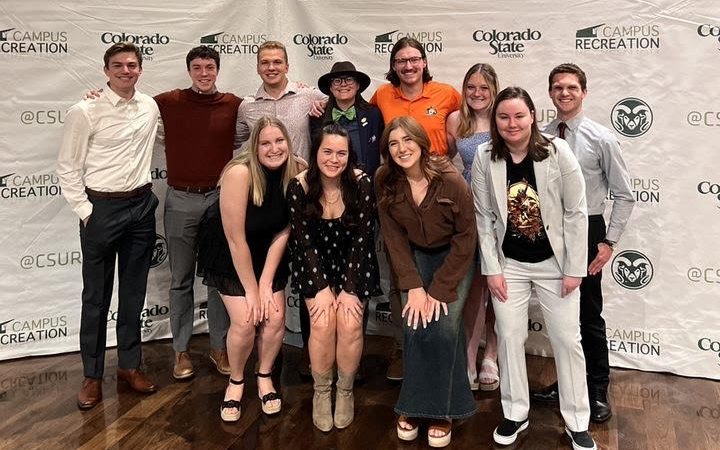
Tim Crane and His Team at a CSU Recreation Gala Assessing a calamity of this size can be daunting. It is a hypersensitive subject, especially for the athletes. Tim Crane’s methodology of using an anonymous reporting system is a great direction to begin this uphill battle. Allowing students to talk about their struggles anonymously is important to ensure they feel safe divulging such a sensitive subject. However, I think offering a less anonymous option for those that need a face-to-face discussion is crucial. I propose offering a support group led by licensed sports counselors. This will allow athletes from all different backgrounds to come together and speak about shared struggles. After all, who knows what it’s like to be a student-athlete better than a student-athlete?
This is a disaster. If all students were struggling with their mental and emotional well-being the way our athletes are, the administrative body would be in a panic. Why do athletes get swept under the rug? Student-athletes are suffering, and we need to offer them a hand.
-
Catalytic Converter Theft and How to Keep Your Cat Safe.
By Ray Mundine
A standard catalytic converter repair averages $3000. Many Americans are not prepared to have a charge of that size dropped in their lap. However, it happens every day in Fort Collins. Catalytic converter, or ‘cat’ for short, theft is on the rise due to its rapid popularization on social media. With just a hacksaw a thief can get under your car, saw off this specialized piece of your exhaust, and be on their way home within 5 minutes. Do you need to get groceries for the week? A cat thief can reliably steal 5 converters in a 30-minute shopping trip.

The purpose of a catalytic converter is to remove harmful pollutants from your car’s exhaust. “They are incredibly important to the car’s exhaust system and will leave your vehicle running loud and will affect its acceleration,” says Brian of Fort Collins Muffler and Exhaust. Brian has been working with exhaust system repair since the 1970s. Brian has seen a recent spike in converter theft in recent years due to the popularization of the crime. “We have two or three customers come in a week with missing cats.” That is roughly $45,000 in repairs a week from just this shop. There are dozens of auto-body shops in Fort Collins that deal with catalytic converter replacements.
Aiden Rocchio is a Fort Collins Resident that had his converter stolen recently. “It’s a terrible feeling. Being victimized at no fault of your own is something that weighs on you every day. Not to mention the financial burden that a crime like this will inflict on people. I almost had to drop out of school because I couldn’t afford to pay for school and get my car repaired.”
The reason these thieves steal converters is unknown to many. There are specialized metals within the cat itself that are sold purely for the value of the commodities. The three most valuable metals are platinum, palladium, and rhodium. The irony of the matter is that the metals contained within the converter only sell for between $50-$250. The Universal Technical Institute is a technical training school. Many of their mechanical engineering classes include education about catalytic converters. Jackson Diedrichs is a mechanical engineering professor whom I spoke with about the school’s curriculum involving catalytic converters. “Because they are being stolen more frequently the school’s curriculum board has decided that our graduates should be well educated about the part as well as the reason for stealing it.” Mr. Diedrichs has a deep hatred for converter thieves and hopes to develop a better way to protect the part. He described a few methods to keep your converters safe:
- Be aware of where you leave your car.
Unfortunately, the crime’s rate is much higher in low-economic locations. Try and avoid parking your car in these locations for long periods of time, especially on the street. The longer your car is parked in a high-risk location the greater the odds you will become a victim.
- 2. Go to the light.
Make sure wherever you do park your car is a well-lit area. Thieves are much less likely to put a saw to your converter if the area is illuminated. It is much easier to get away with crime if no one can see you.
- 3. Park near windows.
If you can see your car, you can protect your car. Thieves will usually go into the middle of a parking isle where cars are concealed by other cars.
- 4. Stay within the vision of security cameras.
While they do act as a deterrent for thieves. These cameras could also be used to catch the perpetrator. For instance, many grocery stores are installing security camera towers in their parking lots due to all kinds of vehicle theft. Parking near these is highly recommended.
- 5. Purchase vehicles that are less susceptible to converter theft.
Toyota Prius is the number one target for converter thieves due to the value of the part and the ease of access. Many Hondas have similar issues. There are plenty of car brands that have better-protected undercarriages like Ford or Nissan.
Thankfully over the next few decades catalytic converter theft should become less common due to electric cars. Because electric vehicles do not produce any exhaust there is no need for a catalytic converter. “As these vehicles become more common on the road converter thieves should begin going out of business,” Diedrich says with a sigh of relief.
Nithya Raman, a Los Angeles city council member, is under fire due to her hot takes on catalytic converter theft. “In this case, I think one of the things that infuriates me, is that we have a company – whatever, Toyota – who makes the Prius, that essentially has a device on their cars which is super easy to remove. It’s basically the value of a MacBook right?” This is an interesting way to look at the issue. However, most experts believe this is treating the symptoms, not the disease. A representative for Fort Collins Police Department Media gave a brief rundown of the situation “The cars are already out there. It is our job alongside local politicians to enact policies and procedures that protect our citizens from catalytic converter theft. We shouldn’t be punishing companies for an unforeseeable circumstance.”
Follow these strategies and be on the lookout for catalytic converter thieves. You never know when your cat could be in danger.
-
R Bar; R Community

With historical and ongoing discrimination against the LGBTQ+ community, R Bar and Lounge in Fort Collins, Colo., the only queer bar in Northern Colo., is a space that holds a lot of power for this group. Bringing to light an obvious issue in our community, why is there such a lack of inclusive spaces for the LGBTQ+ community? R Bar and Lounge, “R” being a spin-off of “our bar,” is trying to combat this problem by offering a space where anyone can comfortably express themselves in an area where there are not many spaces to do so.
Amanda Jo Reisenweber, an employee at the bar, started bar backing and door tending in 2022, by offering her help purely out of her love for the environment. In an interview with Reisenweber about the lack of welcoming spaces for this community she touches on why the owners created R Bar. “I think the most beautiful thing about it is the people who do end up here are immediately family, they’re immediately welcomed, that’s the most common thing people say when they’re talking about R Bar is that I immediately felt welcomed, I felt at home, I could be myself, I felt safe, and so that’s really what this space is all about,” said Reisenweber.
A loud and cheerful crowd at the All-Ages Drag Brunch on Sunday, Mar. 7th, 2023. (Photo/ Kyra Klay) The bar offers a plethora of events like the All-Ages Drag Brunch held every first and third Sunday of the month. Featuring mimosas, food, games, and entertainment from regular drag queens at the bar Khloe Katz, Trina Tuckit, and Hunnie Bun. This has become a very popular event in the community, and like Sunday, Mar. 7, they had reached capacity by the start time of the show. From children bursting with excitement for the drag queens to make their debut on stage, to people ordering mimosas, smiling laughing, and clapping. Even as a new face in the crowd, I felt comfortable expressing myself, personal sexual orientation aside, R Bar has created a space of comfort for people of any kind, which is the goal for any Fort Collins community member.
Gianna Cole, from Colorado Springs, Colo., a new face at the All-Ages Drag Brunch on Sunday, expressed her frustrations about the lack of inclusivity for the LGBTQ+ community in the area. Cole also referred to the 2022 shooting at gay club, Club Q in Colorado Springs that took the lives of five. “A few of my friends knew people who passed away in the Club Q shooting in my hometown, and it is angering to me that a knowingly targeted community has such a lack of security in those spaces especially considering the roller rink down the street even has security guards,” said Cole.
Another new face in the brunch crowd, Laken Rye, was excited to experience a drag show as she had never seen one before. “It is surprising and interesting to me that this is the only gay bar in the area, and it makes me wonder why,” said Rye. Many in the community are unaware of this situation, leading to a lack of safety for community members who identify as queer. “Being that this is the only gay bar in the area I feel like it is safe to say that people might not even feel safe going because it could be so targeted and there really should be more options,” said Rye.
Other than door tending employees, there is no organized police security during events at R Bar, and this is due to the fact that this issue in our community almost goes invisible. Although these events gather a rather large crowd usually exceeding the capacity of the building, there are still plenty of queer-identifying community members who do not feel comfortable attending because of a lack of security.
From the positive emotions that are immediately felt when walking into R Bar and Lounge, it truly goes to show how much the LGBTQ+ community would thrive off of even more options of inclusive spaces not just in Fort Collins, but throughout Northern Colo., and this is an issue that deserves a lot more notice than it does in our community.
-
The Economic Struggles of the Modern Food Market
By Mateo

Less than a decade ago, the average distance that any food product was transported in the United States was 1,500 miles. In the last ten, that number has only grown.
This issue is a joint one, where the blame is shared between both the producers and consumers.
In the U.S., consumers are used to getting what they want, when they want it. This is especially applicable when it comes to food consumption.
Pomegranates are an excellent example of this phenomenon. For example, if you live in Maine, and you want a pomegranate in the middle of winter, you are able to get it[1] . It’ll be on the grocery store aisles along with other fruit staples sold year-round.
But how did that pomegranate get there? It certainly doesn’t grow on the cold, rocky shores that makeup Maine. So, who grew that sweet, seedy, purple fruit?[2]
Well, there’s a good chance that it came from California, where 99% of pomegranate production in the U.S. takes place. But you can’t grow pomegranates in the winter, so how do the producers keep those precious pomegranates fresh?
They ship them off to massive freezers all across the world, and then periodically mail them to grocery stores[3] in accordance with demand.
This method of food production and distribution is costly, ineffective, environmentally hazardous,[4] and provides major farming corporations with a large profit. It also decimates local farming competition.
How is the average Maine farmer going to meet the demand for pomegranates when they are simply incapable of growing them? This issue can’t be blamed entirely on consumers.
This food market was designed and built over time by people who took advantage of the unhealthy diets that a lot of Americans have grown used to. If people like bananas but they don’t like banana flowers, production companies will cut the edible flowers off and create hundreds of thousands of tons of environmental waste. This results in them cashing in on the profits made from selling the bananas without being held responsible for the waste produced.
After half of the banana plant is cut off, they will ship the desired part of the plant all over the world, ship any extras to storage houses, and the cycle of consumption continues.
One particularly expensive aspect of this system is the long-distance transportation that basic food products undergo. Transporting millions of food items all over the world tends to rack up quite a toll on both the ozone layer and the country’s annual expenses.
-
Subscribe
Subscribed
Already have a WordPress.com account? Log in now.
 NoCo Convos